

20 Ways to Organize with Cheap Baskets That Work
I have organized almost every room in my home with cheap baskets, and I am still surprised how much difference a basket costing a few dollars makes. When a shelf, drawer, or closet floor has a basket with a job, things stop drifting around the house and start going back where they belong.
This guide covers baskets room by room: pantry and freezer, bathroom and linen, laundry and entryway, closet and craft, plus toys, books, pets, and papers. Start with one room and one basket, then copy what works next door. The comparison table near the end lines up cost, time, and best use so you can pick quickly.
Key Takeaways
- Baskets work best when each one has a single job, like cans, towels, or toys.
- Dollar-store, thrifted, and handmade baskets all work, as long as the size fits the shelf.
- Label the basket or keep contents visible, or it becomes a hiding place for clutter.
- Start with the room that bothers you most, not the one that photographs best.
- One basket per problem beats ten baskets bought in one excited trip.
1. Dollar-Store Baskets for Pantry Cans

My pantry cans used to roll to the back of the shelf until I bought soup I already owned. I fixed it with two small wire baskets from the dollar store, one for soups and one for beans and tomatoes. Now I pull out a basket instead of digging through a whole shelf.
The honest downside is that cheap wire baskets can bend if you overload them with heavy cans. I keep each basket to a single layer of cans and leave the big bulk cans on the shelf itself. For more pantry ideas, see my dollar-store pantry setup.
Pro Tip: Put the basket on the lowest shelf you can reach, because a basket you cannot reach easily will not get used.
Cost: A few dollars per basket | Time: 15 minutes | Difficulty: Easy
2. Thrifted Baskets for Rolled Linen Towels

Our linen closet was a stack of towels that avalanched every time someone grabbed the bottom one. At a thrift store I found two sturdy wicker baskets for less than one new bin, and now each holds one kind of towel, rolled upright so I see every color.
The downside of thrifted baskets is that they can carry a musty smell from the previous owner. I aired mine outside for a day and wiped them with a damp cloth before they came inside. These baskets look far more expensive than they were.
Pro Tip: Roll towels instead of folding them flat, because rolled towels show at a glance when you are running low on hand towels.
Cost: A few dollars each thrifted | Time: 20 minutes | Difficulty: Easy
3. A DIY Rope Basket for Living Room Blankets

Blankets used to live in a heap on our sofa arm, and every evening started with moving them somewhere else. I wrapped a plain basket in cotton rope with a glue gun over one weekend afternoon, and now all three throws live in that one basket beside the sofa.
The honest downside is that a handmade rope basket will not survive being dragged across the floor by its handles every day. I keep ours in one spot and carry it by the base when it needs moving. See my rope basket project for the full approach.
Pro Tip: Make the basket bigger than you think you need, because blankets always multiply once guests leave theirs behind.
Cost: Under $10 in rope and glue | Time: 1–2 hours | Difficulty: Easy to moderate
4. Wire Baskets That Tame the Freezer
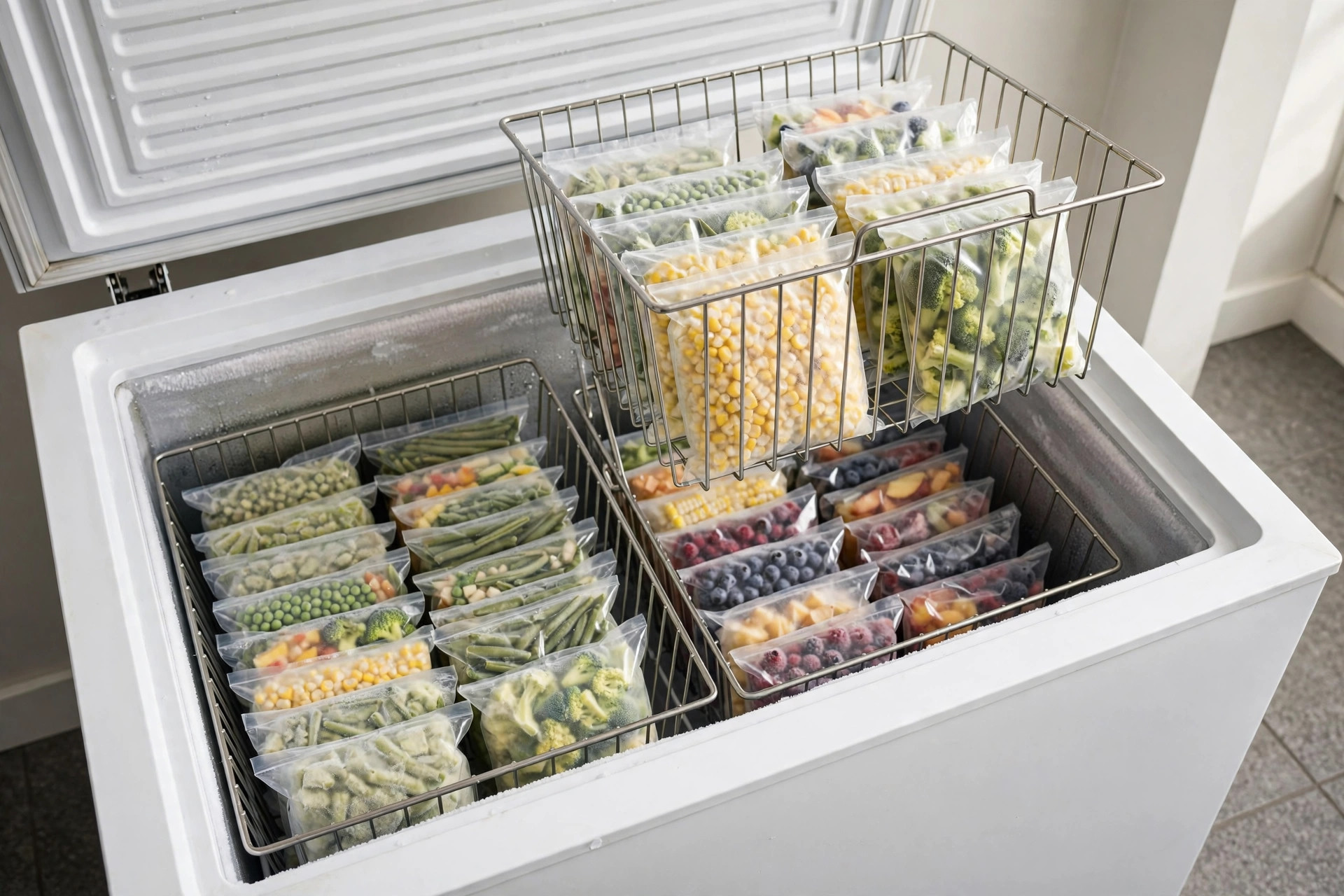
Our chest freezer used to be a frozen archaeology dig, with bags of vegetables buried under bags of bread. I dropped in three small wire baskets, for vegetables, meat, and bread and breakfast items, and now I lift out a basket instead of emptying half the freezer.
The downside is that frost builds up on wire baskets over a few months, and a frozen basket can stick to the freezer wall. I run a quick defrost wipe every month or two. It is a small chore that saves a much bigger one.
Pro Tip: Label each basket with a freezer-safe tag, because once frost covers everything, unmarked baskets look the same.
Cost: A few dollars per basket | Time: 20 minutes | Difficulty: Easy
5. Thrifted Baskets for Fast Toy Cleanup

Toy cleanup used to take twenty minutes of sorting tiny pieces into the right boxes, which meant it never happened before bedtime. Now each child has one big thrifted basket, and everything goes in that basket first. Sorting into smaller homes happens once a week, not every night.
The honest downside is that one big basket can hide broken toys and missing pieces at the bottom for weeks. I dump each basket out every Sunday and pull out anything broken or outgrown.
Pro Tip: Keep the toy basket where the playing happens, because a basket in another room will never get used by a tired child.
Cost: A few dollars each thrifted | Time: 10 minutes to set up | Difficulty: Easy
6. Small Baskets for Bathroom Bits

My bathroom drawer was a tangle of cotton pads, hair ties, and bobby pins I dug through every morning. I put a small jute basket inside the drawer, and now the little things live there while bigger bottles stay beside it. Mornings got noticeably calmer.
The downside is that a fabric or jute basket in a damp bathroom can start to smell if it stays wet. I keep ours away from the sink splash zone and take it out to dry once a month. A plastic basket works better if your bathroom stays very humid.
Pro Tip: Give bobby pins and hair ties their own tiny basket, because those two cause more drawer chaos than everything else combined.
Cost: A few dollars | Time: 10 minutes | Difficulty: Easy
7. A Sewing Basket That Holds Every Notion

My sewing supplies used to live in three drawers, so every repair meant a treasure hunt for scissors, thread, and buttons. I gathered them all into one basket with a small jar inside for buttons, and now mending a hem takes five minutes instead of half an hour of searching.
The honest downside is that a single basket tempts you to toss in every half-finished project until you cannot find the scissors again. I keep one rule: the basket holds tools only, and current projects live in a separate bag.
Pro Tip: Put a small magnet inside the basket, because loose needles will find it instead of finding your fingers.
Cost: A few dollars, plus jars you already own | Time: 20 minutes | Difficulty: Easy
8. Under-Sink Baskets for Cleaning Supplies

Under our kitchen sink, spray bottles fell over whenever I reached for dish soap, and one leaked all over the shelf. I put two plastic baskets under there, one for daily sprays and one for rags and sponges, and now I pull out a basket instead of knocking things over.
The downside is that a leaking bottle can still pool inside a basket and go unnoticed. I check the bottom of each basket when I wipe the sink area each week.
Pro Tip: Use plastic baskets, not wicker, under a sink, because plastic wipes clean and will not warp the first time something spills.
Cost: A few dollars per basket | Time: 15 minutes | Difficulty: Easy
9. Thrifted Baskets as Plant Holders

My plants looked fine but their plastic nursery pots made the whole room feel unfinished. I started slipping the pots into thrifted baskets found for a couple of dollars each, and suddenly the same plants looked like part of the decor.
The honest downside is that water drains straight through a basket and onto your floor or shelf. I always leave the plastic pot inside the basket and set a saucer under it, which protects the basket and the furniture.
Pro Tip: Pick a basket wider than the pot, because a tight basket traps moisture and makes watering messy.
Cost: A few dollars each thrifted | Time: 5 minutes per plant | Difficulty: Easy
10. An Entryway Basket for Shoes and Boots
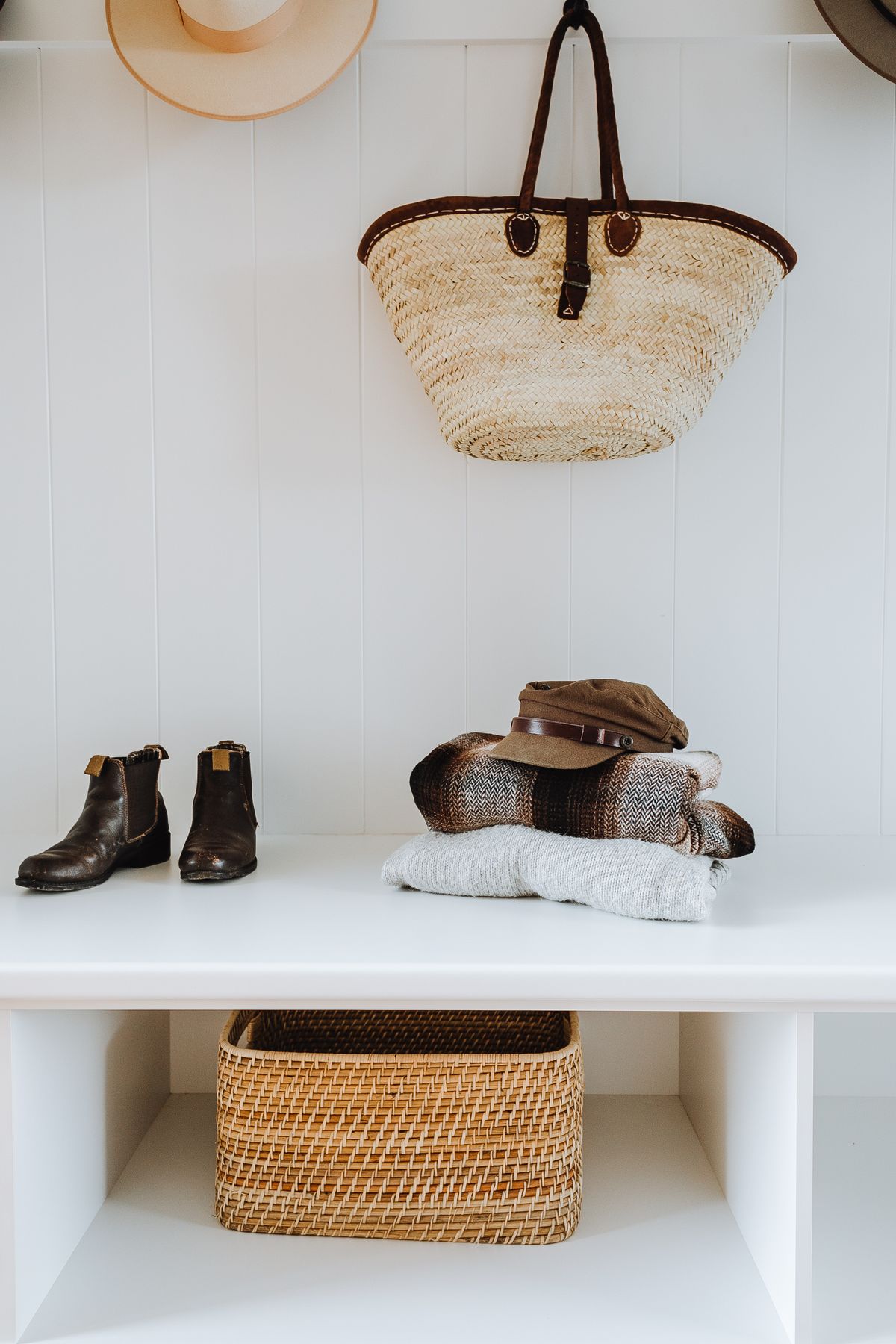
Shoes used to pile up by our front door until someone tripped over them daily. I placed a wide, low basket beside the bench, and now shoes go in the basket when we come in. The floor by the door finally stays clear, even on school mornings.
The downside is that wet or muddy boots will soak a natural basket and make it smell. In rainy months I switch to a plastic basket with holes for air, and the wicker one returns when things dry up.
Pro Tip: Limit the basket to this week’s shoes, because a basket holding every shoe you own becomes a closet on the floor.
Cost: A few dollars | Time: 10 minutes | Difficulty: Easy
11. A Movie-Night Snack Basket

Movie nights used to mean five trips to the pantry for popcorn, drinks, and snacks while the film waited. I filled one basket with our usual movie snacks and keep it on a pantry shelf, so now one person carries it and movie night starts on time.
The honest downside is that a snack basket empties fast and then sits there taking up a shelf for no reason. I refill it right after movie night while I am already in the kitchen.
Pro Tip: Keep the snack basket on a shelf kids can reach, because one only adults can reach will never get carried by the kids.
Cost: A few dollars for the basket | Time: 15 minutes to fill | Difficulty: Easy
12. A Paper Basket for Books and Notebooks

Books and notebooks used to spread across our coffee table, sofa, and counter until I could not find the one I was reading. I put a tall basket beside my reading chair, and now current books and notebooks live there until I finish them, and the tables stay clear.
The downside is that a paper basket fills up with finished books and old notebooks if you never empty it. I clear mine monthly, returning finished books to the shelf and recycling old notes.
Pro Tip: Keep the paper basket beside your reading chair, because one across the room will lose to the nearest flat surface every time.
Cost: A few dollars | Time: 10 minutes | Difficulty: Easy
13. A Cheap Basket for Caps and Hats

Caps used to live on our dresser, on hooks, and occasionally on the closet floor, which meant the favorite one was always missing. I hung a row of hooks inside the closet door and put a small basket below for caps nobody wears daily, and now every cap has one of two homes.
The honest downside is that caps squashed into a basket lose their shape over time. I keep the everyday caps on hooks and only the out-of-season ones in the basket, loosely packed, which has kept their brims from bending.
Pro Tip: Stuff a rolled sock inside a cap before storage, because it holds the shape without special cap inserts.
Cost: A few dollars | Time: 15 minutes | Difficulty: Easy
14. A Basket for Hair Tools and Cosmetics
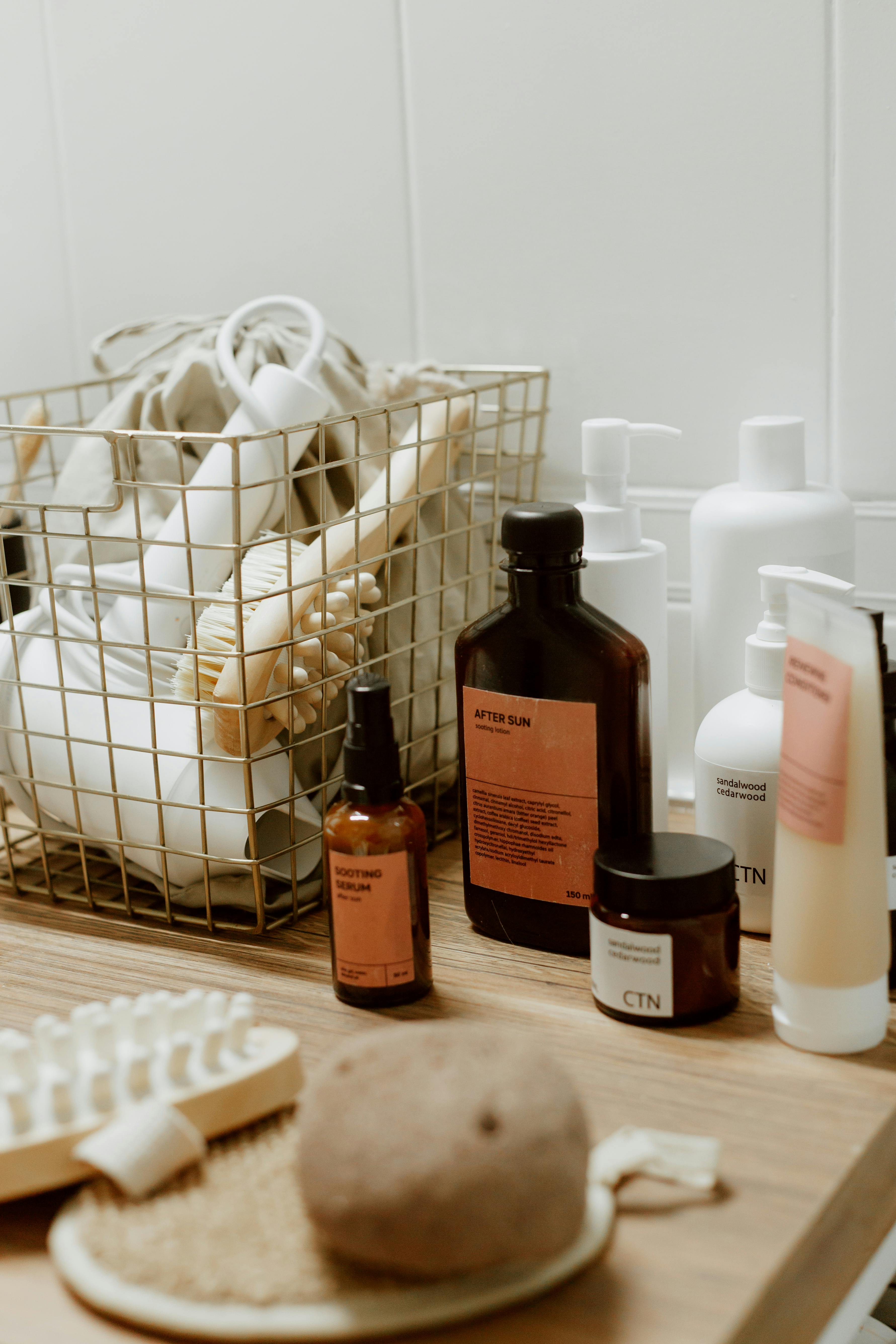
My hair dryer, straightener, and brushes used to fight for space in a bathroom drawer that never closed. I moved them into a heat-safe basket on a shelf, cords wrapped loosely, and now getting ready takes less time because I can see everything at once.
The downside is that putting a hot tool straight into a basket can scorch fabric or melt plastic. I wait until tools are cool before they go back, and I never wrap a cord tightly around a hot barrel.
Pro Tip: Keep the basket on an open shelf, not in a closed cabinet, because trapped heat and steam age both basket and tools faster.
Cost: A few dollars | Time: 10 minutes | Difficulty: Easy
15. A Yarn and Craft Basket by the Chair

My yarn and half-finished knitting used to migrate around the living room in plastic bags that tore. I moved the current project into a coiled basket beside my chair, with the working yarn on top, and now I can pick up my knitting in seconds instead of untangling it first.
The honest downside is that a yarn basket invites every new skein into it until the current project is buried. I keep one rule: only the project I am working on lives in the chair basket.
Pro Tip: Thread the working yarn through the basket handle, because it stops the ball rolling across the floor every time you pull.
Cost: A few dollars | Time: 10 minutes | Difficulty: Easy
16. Laundry Sorting Baskets That Cost Almost Nothing

Laundry used to pile up in one giant heap I sorted on wash day, which meant wash day took forever. I set out three baskets in the laundry corner, one for darks, one for lights, and one for towels, and now sorting happens automatically as clothes come off.
The downside is that three baskets take up floor space that a small laundry corner may not have. I stack two of them when they are empty and only spread all three on wash day.
Pro Tip: Label each basket by load type, because without labels everyone will use whichever basket is closest.
Cost: A few dollars per basket | Time: 10 minutes | Difficulty: Easy
17. An Entryway Basket for Mail and Everyday Items

Mail, keys, and sunglasses used to land on every surface near our front door until something important went missing. I put one basket on the entry table, and now everything that comes in with me goes in first. Finding my keys stopped being a morning event.
The honest downside is that a mail basket becomes a paper mountain if junk mail never leaves it. I stand at the basket for thirty seconds when I come in and recycle flyers and ads on the spot.
Pro Tip: Empty the mail basket every Sunday night, because one that never empties stops being a system and starts being a drawer.
Cost: A few dollars | Time: 5 minutes | Difficulty: Easy
18. An Under-Shelf Basket for Spices and Small Jars

Small spice jars and sauce packets used to get lost behind big bottles in our kitchen cabinet. I hooked a small wire basket under one shelf, and now the little jars live in it where I can slide the whole basket out and see everything at once.
The downside is that an overloaded under-shelf basket can sag or slide off its hooks. I keep ours to light jars and packets only, and I check the hooks every month or so.
Pro Tip: Put weekly spices in the under-shelf basket, because it earns its space only if you reach for it constantly.
Cost: A few dollars | Time: 10 minutes | Difficulty: Easy
19. A Basket Station for Pet Supplies
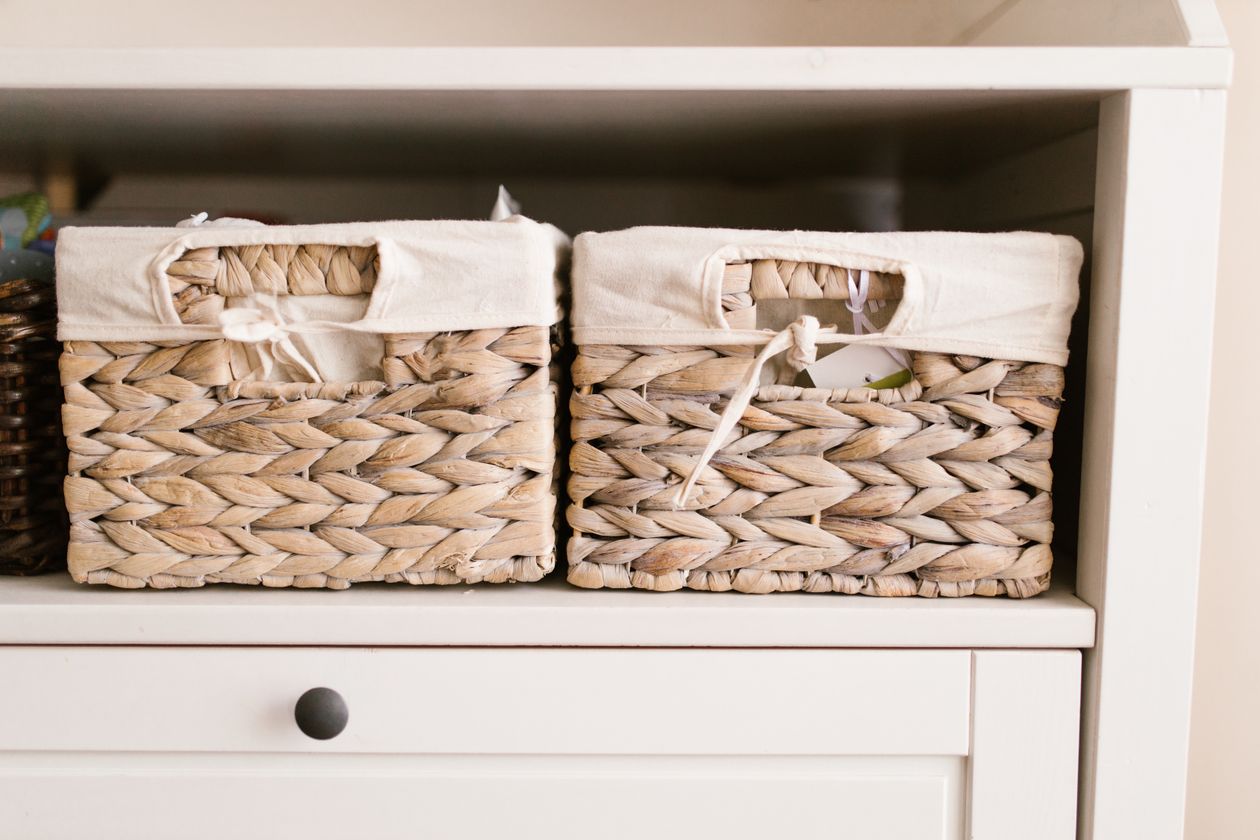
Pet food, treats, and leashes used to live in three spots, so feeding time meant opening three cupboards. I put two baskets on a low shelf by the back door, one for food and treats and one for leashes and toys, and now one stop covers the pet routine.
The honest downside is that a determined pet can nose into an open basket and scatter treats everywhere. I use baskets with lids for the food basket and leave only the leash basket open.
Pro Tip: Keep pet baskets by the door you use for walks, because one in the pantry will never beat the door for convenience.
Cost: A few dollars per basket | Time: 15 minutes | Difficulty: Easy
20. Lidded Baskets for Closet Shelf Clutter

Our closet top shelf was half-open boxes and loose items that rained down whenever I reached for something. I replaced them with three lidded baskets, one for seasonal accessories, one for bags, and one for keepsakes, and the shelf finally looks calm instead of chaotic.
The downside of lidded baskets is that you forget what is inside them, which leads to buying duplicates. I taped a small label on the front of each lid. For a broader look at basket storage, see my guide to organize with baskets in general.
Pro Tip: Take a photo of each basket’s contents and stick it inside the lid, because a photo beats a label when contents change.
Cost: A few dollars per basket | Time: 30 minutes | Difficulty: Easy
Cheap Baskets Compared: Cost, Time, and Best Use
| Basket idea | Typical cost | Setup time | Best for |
|---|---|---|---|
| Dollar-store pantry baskets | A few dollars each | 15 minutes | Cans and small pantry items |
| Thrifted linen baskets | A few dollars each | 20 minutes | Towels and bedding |
| DIY rope blanket basket | Under $10 | 1–2 hours | Blankets and throws |
| Wire freezer baskets | A few dollars each | 20 minutes | Frozen food by category |
| Entryway shoe basket | A few dollars | 10 minutes | Daily shoes and boots |
| Lidded closet baskets | A few dollars each | 30 minutes | Top-shelf clutter |
Mistakes I Made (So You Don’t Have To)
Mistake 1: Buying baskets before measuring. I once bought a beautiful set of baskets that were half an inch too wide for the shelf. They sat in the garage for months. Now I measure first, every single time.
Mistake 2: One giant basket for everything. A huge living room basket became a black hole where remotes, toys, and mail vanished. Smaller baskets with one job each work far better than one basket trying to do everything.
Mistake 3: Skipping labels. I thought I would remember each lidded basket’s contents, and within a month I owned three duplicate phone chargers. A simple label on the front saves money and frustration.
Mistake 4: Using wicker where water lives. I put a wicker basket under the bathroom sink, and one leak warped it beyond saving. Wet zones need plastic or wire baskets, and wicker belongs in dry rooms only.
Mistake 5: Overfilling every basket. A basket stuffed past its rim looks worse than no basket at all, and things fall out every time you move it. I now leave empty space at the top, which keeps baskets looking tidy and working well.
Frequently Asked Questions
Are cheap baskets sturdy enough for heavy items?
Inexpensive baskets handle light and medium loads well, like towels, toys, and pantry items, but struggle with very heavy things like books or canned food stacked high. For heavy loads, use smaller baskets and a single layer, and save the biggest items for the shelf.
Where do you find the best inexpensive baskets?
I find most of mine at dollar stores for wire and plastic baskets, and at thrift stores for wicker and woven ones. Garage sales and clearance bins are also worth checking. Buy the size you measured for, not the prettiest basket on the shelf.
How do you clean thrifted baskets before using them?
I air them outside for a day, wipe them with a damp cloth, and let them dry completely before they come inside. For stubborn smells, diluted vinegar usually helps. If it still smells after that, I pass and keep looking.
Do baskets work in small homes, or do they just add clutter?
They work in small homes only when each basket replaces a pile rather than covering it up. I learned this the hard way when a basket of unsorted papers just moved my mess from the table to the shelf. One basket per problem, emptied regularly, is the rule that keeps them helpful.
Final Thoughts
Baskets will not organize your home by themselves, but they make staying organized much easier. A basket gives every small thing a visible home, and visible homes are the ones things return to. Start with the room that frustrates you most, buy one basket that fits, and see how it feels for a week.
If it works, copy it into the next room. If it does not, change the size, spot, or job, not the whole system. That slow approach took our home from piles everywhere to baskets that quietly do their job, for a few dollars at a time.




3 Comments