
20 Teen Organization Ideas That Actually Work for Busy Families
If you have ever opened your teenager’s bedroom door and immediately closed it again, you are not alone. I have stood in that doorway more times than I can count, staring at a floor covered in hoodies, chargers, school papers, and at least one mystery sock.
For years I tried to fix it with big clean-out weekends, and every single time the mess was back within a week. What finally changed things in our house was not a bigger clean-up. It was smaller systems that my teen could actually keep up with on a normal, busy school day.
These teen organization ideas are the ones that survived real life in our home: homework, sports practice, part-time jobs, and all.
The secret I learned is that teenagers do not need a perfect room. They need a room that resets fast. Every idea below is something we tried, kept, or adjusted until it worked, and I will tell you honestly what each one costs and how long it takes. Start with two or three, not all twenty.
That is how we did it, and it is the only reason any of it stuck.
The 20 ideas build systems a busy teen can keep up with: bedroom zones and a launch pad by the door, planners and boards for deadlines, and caddies for homework, sports gear and laundry. Each idea notes its honest cost, time and difficulty, so start with the two or three that fix your worst morning and build from there.
Key Takeaways
- Small daily systems beat big weekend clean-outs every time.
- Give every category of stuff one obvious home, and label it if it helps.
- Let your teen choose the tools; they will use what they picked themselves.
- A five-minute nightly reset prevents most of the weekend chaos.
- Start with just two or three ideas and add more once those feel easy.
20 Teen Organization Ideas That Work
1. The Sunday Reset (20 Minutes, Not a Whole Day)

We used to spend entire Saturdays cleaning my son’s room, and by Wednesday it looked the same. Then we switched to a Sunday reset: twenty minutes, a timer, and a short checklist on his phone. He puts laundry in the hamper, clears the desk, throws away trash, and puts everything else back where it belongs. That is it.
The timer matters because twenty minutes feels doable, while “clean your room” feels endless. I set a reminder on Sunday evenings, and I stay out of the way while he does it. Within a month, the room stopped spiraling, because mess never got more than a week old.
It is the single most effective habit on this list, and it costs nothing at all.
Pro Tip: I keep the reset list on my teen’s phone lock screen for that week so nothing on it depends on remembering a paper list.
Cost: $0 | Time: 20 minutes weekly | Difficulty: Easy
2. One Planner, One System

My daughter tried three different apps before we figured out the real problem: she had assignments in too many places. Now she uses one paper planner, and everything goes in it the moment a teacher assigns it: homework, test dates, practice times, and even birthday parties.
I helped her pick one she actually liked looking at, with a layout that made sense to her, because a planner she hates is a planner she will not open. Every Sunday she spends five minutes copying the week’s big items onto a sticky note on her desk.
It is not fancy, but for the first time ever, nothing important has slipped through the cracks this school year.
Pro Tip: I have my teen write the due date in the planner the same minute a teacher announces it, before the paper handout ever reaches the bottom of a bag.
Cost: $8-$20 for a planner | Time: 5 minutes daily | Difficulty: Easy
3. Color-Code by Subject

This one sounds almost too simple, but it changed mornings in our house. Each school subject gets its own color: blue folders for math, green for science, red for English, and so on. The same colors carry over to the planner, the binders, and the shelf where school stuff lives.
When my teen is packing her bag at night, she can see at a glance whether the blue folder made it in. No more digging through a backpack at 7 a.m. looking for one worksheet.
We bought a pack of colored folders for a few dollars, and I let her choose the colors herself, which honestly made her more likely to stick with it.
Pro Tip: I put a matching colored dot on the spine of each binder so I can spot the right subject on a crowded shelf without pulling every binder out.
Cost: $5-$10 | Time: 30 minutes to set up | Difficulty: Easy
4. Divide the Bedroom Into Zones

A teen bedroom has to do too many jobs: sleeping, studying, hanging out, and storing half a life. We made it easier by dividing the room into zones, even in a small space. The desk corner is for schoolwork only, the bed is for sleeping and reading, and a small chair by the window is the relaxing spot.
We did not buy new furniture; we just moved things around and talked about what belongs where.
Pro Tip: I keep school books out of the relaxing corner entirely so homework never quietly follows my teen into downtime.
Cost: $0-$20 | Time: 1-2 hours to rearrange | Difficulty: Easy
5. Build a Launch Pad by the Door

Our mornings used to be a frantic search for keys, bags, and shoes. The fix was a launch pad: one small spot by the door where everything for tomorrow lives tonight. A hook for the backpack, a tray for keys and wallet, and a basket for shoes.
My teen packs the bag the night before and parks it on the hook, so the morning is just grab-and-go. I will be honest, it took about two weeks of reminders before it became automatic, but now it saves us at least ten minutes every school morning.
If you have a small entryway, a single hook and a basket on the floor work just as well.
Pro Tip: I drop tomorrow’s permission slip into the launch-pad tray the night before so it never hides under a textbook in the morning rush.
Cost: $0-$25 | Time: 30 minutes to set up | Difficulty: Easy
6. A Backpack With a Home for Everything

For years my son carried one giant bag compartment, and everything inside it became a jumbled mess by Friday. A backpack with real compartments changed that completely. His laptop has a padded sleeve, pens live in a small front pocket, and the water bottle has its own side pocket.
The rule is simple: everything goes back in its pocket the moment he is done with it. It sounds picky, but it means he never has to dump the whole bag on the floor to find a pencil. We spent a little more on a sturdy bag, and it has lasted two school years so far.
Pro Tip: I assign the smallest pocket to loose change and earbuds so they stop sinking to the bottom of the main compartment.
Cost: $25-$60 | Time: 10 minutes to organize | Difficulty: Easy
7. Move the Charging Station Out of the Bedroom

This one is about more than organization, but it transformed our evenings. We moved the family charging station to the kitchen counter, and every phone and tablet sleeps there overnight. Suddenly there were no more chargers tangled in the bedsheets, no more devices lost under the bed, and, as a bonus, mornings started a lot calmer.
The station is just a power strip inside a small basket with short cables, one per device. My teen grumbled for about three days, then admitted that not having a phone buzzing all night actually helped her sleep.
If a full move feels like too much, start with a rule that chargers live in one drawer, not scattered around the room.
Pro Tip: I plug in my own phone at the kitchen station too, which makes the rule feel shared instead of imposed.
Cost: $10-$20 | Time: 15 minutes | Difficulty: Easy
8. A Homework Caddy That Travels

Some days homework happens at the desk, some days at the kitchen table, and some days at a friend’s house. A homework caddy made that chaos manageable. It is a small handled tote with pencils, highlighters, sticky notes, a ruler, and a calculator, and it travels wherever the homework goes.
When the work is done, the caddy goes back on its shelf, and the supplies stop migrating all over the house. I made ours from a dollar-store tote and supplies we already had, so the whole thing cost almost nothing. The trick is to restock it on Sundays during the reset, or it slowly empties itself over the month.
Pro Tip: I slip a spare eraser and a sharpened pencil into the caddy’s side pocket so a broken pencil never ends a study session early.
Cost: $5-$15 | Time: 20 minutes to assemble | Difficulty: Easy
9. Binder Clean-Out Fridays
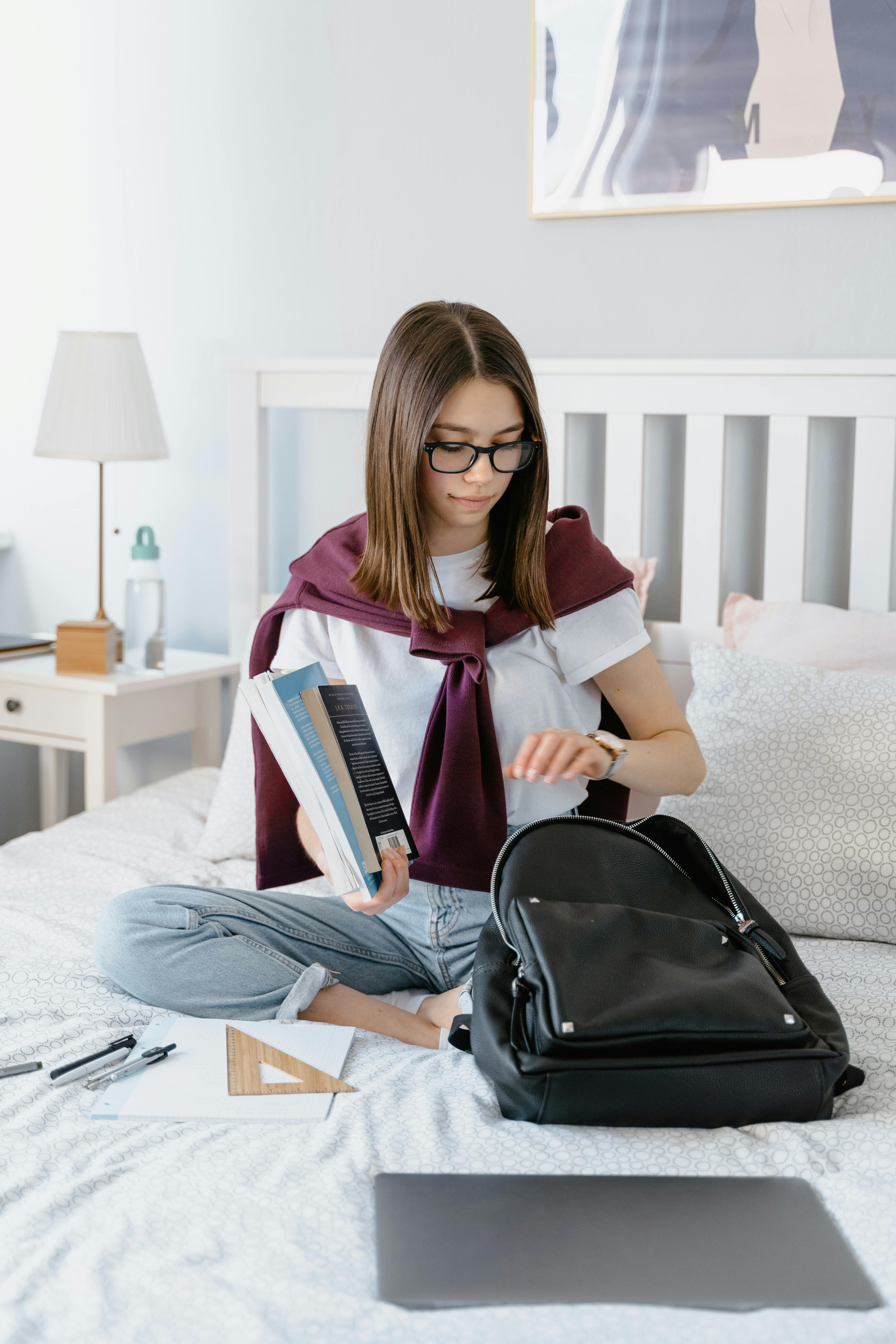
Binders are where school papers go to disappear. My teen’s used to grow thicker every week until the rings would not close. Now every Friday after school, she spends ten minutes pulling out old worksheets and filing the ones she needs to keep in a folder at home. The rest gets recycled.
We keep one “keep” folder per subject on a shelf, and that is the only place old papers are allowed to live. It is a small habit, but it means binders stay light, zippers actually close, and nothing important gets buried under three months of handouts.
Pro Tip: I keep one slim folder labelled for the current term’s keepers so Friday clean-outs never turn into a debate about every old worksheet.
Cost: $0 | Time: 10 minutes weekly | Difficulty: Easy
10. Hang It or Lose It: The Closet Rule

The chair in my son’s room used to hold a mountain of clothes that were “not dirty enough to wash, not clean enough to put away.” We fixed it with one rule: clothes go on a hanger or in the hamper, never on the chair.
We also added a few extra hangers and a small basket for the in-between clothes, because I learned that a rule only works if there is an easy place to follow it. The chair is now actually a chair again.
If your teen’s closet is part of the problem, a quick declutter first helps a lot; we have a whole guide to kids closet organization that works just as well for teen closets.
Pro Tip: I hang tomorrow’s outfit on the closet door hook each night so the morning choice is already made.
Cost: $0-$10 | Time: 30 minutes | Difficulty: Easy
11. Under-Bed Bins for Off-Season Stuff

Teen rooms are rarely big, and off-season clothes and old sports gear eat up closet space fast. Flat bins under the bed solved that for us. One bin holds winter sweaters and heavy jackets in summer, another holds outgrown sports equipment we are not ready to donate yet.
I labeled each bin with masking tape and a marker, because unlabeled bins just become mystery boxes. The best part is that under-bed storage is invisible, so the room looks calmer even when it is technically still full.
Just measure the clearance under the bed before buying bins; our first set was half an inch too tall, and I learned that lesson the annoying way.
Pro Tip: I slide a small list of what’s inside each bin under its lid so I don’t have to drag both bins out to find one jacket.
Cost: $10-$25 for two bins | Time: 30 minutes | Difficulty: Easy
12. A Morning Routine Chart (Yes, Even for Teens)

I know, a routine chart sounds like something for little kids, but hear me out. My teen’s chart is not a chore list; it is a simple sequence stuck inside the closet door: shower, dress, breakfast, bag, shoes, out the door. On tired mornings, she does not have to think, she just follows the order.
We made it together, so it feels like hers, not mine, and that made all the difference. If mornings in your house feel rushed and chaotic, this tiny bit of structure is worth trying before anything more complicated.
Pro Tip: I order the chart by what actually causes delays in our house, putting bag-packing before shoes so nothing gets forgotten at the door.
Cost: $0 | Time: 15 minutes to make | Difficulty: Easy
13. Timers for Homework Sprints

Homework used to stretch for hours in our house, mostly because it was constantly interrupted by snacks, phones, and wandering. A simple timer fixed the focus problem. My son works in 25-minute sprints with a five-minute break in between, and he sets the timer himself on his phone or a kitchen timer.
Knowing there is a break coming makes it much easier to start, and the sprints add up fast: two sprints usually cover a whole evening’s homework. I do not police the breaks, and that trust matters. The timer does the nagging so I do not have to, and our evenings are noticeably calmer because of it.
Pro Tip: I let my teen choose the ringtone for the sprint timer, which sounds small but makes starting feel like their decision.
Cost: $0-$10 | Time: 5 minutes to learn | Difficulty: Easy
14. A Memo Board for Deadlines

Even with a planner, big dates used to sneak up on us. A memo board on the bedroom wall fixed that. It holds the month’s big items: test dates, project due dates, game days, and permission slips that need signing.
My teen updates it during the Sunday reset, and I can glance at it without having to ask a dozen questions. We use a small cork board and colorful pins, and it doubles as a place for photos and ticket stubs, so it actually looks nice on the wall.
The key is keeping it current; a board with last month’s dates on it is just decoration, so the Sunday update is non-negotiable in our house.
Pro Tip: I pin the permission slip itself to the memo board rather than just writing its date down, so the signature never gets lost.
Cost: $10-$20 | Time: 20 minutes to set up | Difficulty: Easy
15. A Sports Gear Station That Contains the Chaos

If your teen plays sports, you know the gear situation: cleats by the door, a bag in the hallway, shin guards who-knows-where. We gave all of it one station in the garage: a large bin for the bag, a small shelf for shoes, and hooks for helmets and bags.
After practice, everything goes back to the station, and the bag gets packed for the next day right there. It took one afternoon to set up, and it ended the daily “where are my cleats?” crisis completely. For families without a garage, a corner of the mudroom or a large basket by the door works the same way.
Pro Tip: I hang a small mesh bag beside the gear station for muddy socks so they stop travelling through the house after practice.
Cost: $15-$30 | Time: 1 hour | Difficulty: Easy
16. Laundry Baskets Teens Actually Use

Laundry was a constant battle until we stopped fighting it and changed the system instead. Now there are two hampers in my teen’s room: one for lights, one for darks. When a hamper is full, she brings it to the laundry room and starts a load herself.
Presorting removed the biggest excuse, and doing her own laundry turned out to be a life skill she was secretly proud to learn. I taught her the settings once, wrote them on a card taped above the machine, and stepped back.
There are still weeks when a hamper overflows, but the floor stays clear, and that is a win I will take.
Pro Tip: I place the lights hamper nearer the closet door than the darks one, since light clothes pile up faster in our house.
Cost: $10-$20 for a second hamper | Time: 15 minutes | Difficulty: Easy
17. A Simple Digital File System

Schoolwork is not just paper anymore, and my teen’s laptop desktop used to be a sea of files named things like “final_final_v2.” We set up a simple folder system together: one folder per subject, with subfolders for assignments and notes, and a naming rule that includes the date and topic.
It took twenty minutes, and it has saved hours of searching since. I also showed her how to back up important work to a free cloud folder, because losing a finished essay the night before it is due is a pain no one needs.
This is one of those teen organization ideas that feels boring until the first time it saves a grade.
Pro Tip: I start every school file name with the subject abbreviation so files sort themselves alphabetically by subject on any device.
Cost: $0 | Time: 20 minutes | Difficulty: Easy
18. The Two-Minute Nightly Reset

The Sunday reset handles the week, but the nightly reset handles the day. Before bed, my teen spends two minutes: desk cleared, tomorrow’s clothes picked out, bag packed, and phone on the charger in the kitchen. Two minutes is short enough that there is no argument about it, and it makes mornings dramatically smoother.
I paired it with something she already does, brushing her teeth, so it became part of the same routine instead of a separate task.
If your teen’s room is small, a nightly reset matters even more; a little mess in a small room feels like a lot, and our guide to organizing a small bedroom has more ideas that work in tight spaces.
Pro Tip: I pair the nightly reset with brushing teeth so it rides on a habit my teen already does without thinking.
Cost: $0 | Time: 2 minutes nightly | Difficulty: Easy
19. A Vision Board for Goals

This one surprised me. My daughter made a vision board at the start of the school year: photos, quotes, and goals she cut out of old magazines, pinned to a board above her desk. I expected it to last a week.
Instead, it became a daily reminder of what she is working toward, from making the team to saving for a trip. It also gave her a reason to keep the desk area tidy, because the board is the centerpiece of that wall.
It costs almost nothing, takes an afternoon to make together, and it is one of the few organization projects my teen actually asks to redo.
Pro Tip: I swap one photo on the vision board each term so it reflects what my teen is working toward now, not last September.
Cost: $0-$10 | Time: 1-2 hours | Difficulty: Easy
20. A Weekly Family Planning Meeting
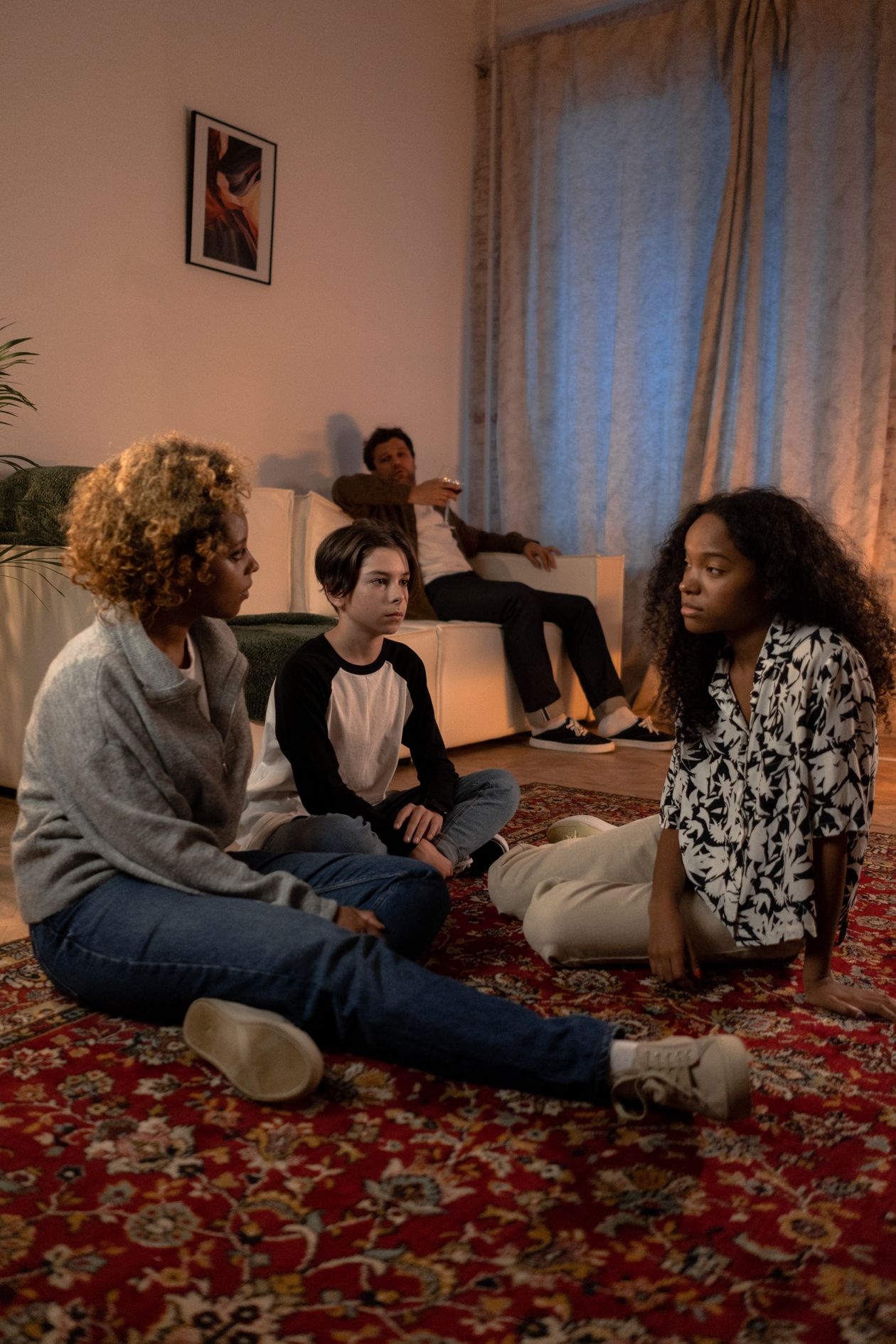
The last idea is the one that holds all the others together. Every Sunday evening, we sit down for ten minutes and go over the week: who needs a ride where, what big assignments are due, what games or events are on, and what needs to be bought.
My teen brings her planner, I bring the family calendar, and we compare notes. It sounds formal, but it is really just a quick chat over snacks. Since we started, the surprise “I need poster board tonight!” emergencies have almost disappeared, and my teen feels more in control of her own schedule.
If your house has younger kids too, the same meeting helps everyone; our post on organizing children’s toys uses the same idea of one family system for shared spaces.
Pro Tip: I end our planning meeting by naming one ride or errand each person owns that week so nothing stays vaguely “someone’s job.”
Cost: $0 | Time: 10 minutes weekly | Difficulty: Easy
Teen Organization Ideas at a Glance
| Idea | Best For | Cost | Time to Set Up |
|---|---|---|---|
| Sunday reset | Weekly mess control | $0 | 20 min/week |
| One planner | Homework and deadlines | $8-$20 | 5 min/day |
| Color-coded subjects | Packing the bag | $5-$10 | 30 min |
| Bedroom zones | Focus and sleep | $0-$20 | 1-2 hours |
| Launch pad | Calm mornings | $0-$25 | 30 min |
| Charging station | Cables and sleep | $10-$20 | 15 min |
| Homework caddy | Study anywhere | $5-$15 | 20 min |
| Nightly reset | Daily tidiness | $0 | 2 min/night |
| Family meeting | Whole-week planning | $0 | 10 min/week |
Mistakes I Made
My biggest mistake was trying to organize my teen’s room for her, without her. I bought bins, labeled everything, and arranged it all beautifully while she was at school. She hated it, ignored it, and the room was a mess again in two weeks. The system only worked once she helped design it and chose her own tools.
My second mistake was starting with all twenty ideas at once, which overwhelmed both of us. Start with two or three, let them become habits, and then add more. And my third mistake was expecting perfection. The goal is a room that works and resets quickly, not one that impresses visitors.
Frequently Asked Questions
How do I get my teenager to care about organizing?
Let them choose the tools and set the rules with you. Teens resist systems imposed on them, but they will use a planner they picked out and a routine they helped design. Focus on one pain point they actually feel, like losing homework or stressful mornings, rather than on how the room looks to you.
What is the best planner for a teenager?
The best planner is the one your teen will actually open. Some teens love a paper planner they can decorate, while others prefer a phone app with reminders. Try both for two weeks and keep whichever one gets used. The tool matters far less than the habit of writing things down in one place.
How often should a teen clean their room?
A short daily reset of two to five minutes plus a twenty-minute weekly reset works better than one big monthly clean. Small, regular habits keep mess from building up to the point where it feels overwhelming, which is usually when teens give up entirely.
Should I organize my teen’s room for them?
It is tempting, but it rarely sticks. Help them set up the system, teach them how it works, and then step back and let them run it. You can check in during the Sunday reset, but the room will only stay organized if your teen feels ownership over it.
What if my teen shares a room?
Shared rooms need clear boundaries even more than single rooms. Give each teen their own zone, their own storage, and their own launch pad spot, even if the zones are small. Shared supplies can live in one homework caddy that both teens use, and a short weekly reset keeps shared spaces fair.
Final Thoughts
Teen organization is not about a perfect bedroom. It is about giving your teenager a few simple systems that make their busy life easier, and then trusting them to use those systems. We started with a Sunday reset and a planner, and over a few months the rest followed naturally.
Some ideas will click immediately, and some will flop, and that is completely normal. Pick two or three, try them for a month, and keep the ones that actually make mornings calmer and homework less stressful. That is what organization is really for.