20 Kallax Organization Hacks for Every Room in Your Home
This is the KALLAX system: one product, every room, $80–$300 for the unit plus $8–$30 per insert. Start by measuring — every cube is 13 × 13 × 15 inches.
Measure first — the unit is 15⅜ inches deep, a 4×4 is 57⅞ × 57⅝ inches, and a 2×4 lying down is 57⅝ × 30⅛ inches. Pick the size for the room: a 2×2 for a small corner, a 2×4 as a media console or low bench, a 4×4 for a full wall, a 5×5 for the most cubes. Each shelf holds 29 lb and the top of a 2×4 takes 55 lb, so heavy books and records go low and light display goes high. Anchor every unit into a stud with the included hardware, and never hang a KALLAX on a wall. DRÖNA boxes ($8–$12 each) and door and drawer inserts ($10–$30 each) give every cube one job — living room, mudroom bench, bedroom closet, craft room, kids’ toy cubes, office filing. KALLAX is hollow-core particleboard, so never sit on it without a solid ¾-inch plywood top first.
There is a reason the IKEA Kallax shows up in so many homes: a simple grid of square cubbies turns out to be one of the most flexible pieces of furniture ever made.
I bought my first one for a kid’s bedroom, and five years later I have used the same style of shelf in a craft room, an entryway, a laundry area, and a living room.
These kallax organization hacks are the ones I actually tried, kept, or wish I had known sooner, and they all work with the same basic idea: give every cubby a job, and use bins and labels to make the system easy to maintain.
Before we start, one honest note: a Kallax only stays organized if you plan it before you fill it. Decide what goes in each cube first, then buy bins to match, not the other way around. I learned that the expensive way, with a pile of bins that did not fit anything.
Here are twenty ideas, room by room, that will help you get it right the first time.
The 20 hacks make one square-cubby shelf work in every room, from linen cupboards and toy rotations to craft centers, shoe walls, office shelves, and pantry overflow. Every idea lists its honest cost, time, and difficulty, so start with the room where your cubbies sit empty or overstuffed.
Key Takeaways
- Plan each cubby’s job before buying bins, or you will end up with bins that fit nothing.
- Fabric cubes with labels are the easiest way to hide clutter and keep categories clear.
- The same shelf works in almost any room, from entryways to craft rooms.
- Anchor tall units to the wall, especially in homes with kids or pets.
- Leave one or two cubes open for display, so the shelf looks like furniture, not a warehouse.
20 Kallax Organization Hacks
1. Start With the Right Size
Kallax units come in several sizes, from a single column to a wide four-by-four grid, and choosing the right one matters more than any accessory. I once squeezed a tall unit into a small room where it overwhelmed everything, and I once bought a small one for a playroom that filled up in a week.
Measure your wall, think about what will actually live in the cubes, and leave a little breathing room around the unit. A good rule is to buy one size bigger than you think you need if you have the wall space, because cube storage has a way of filling up fast.
The unit itself is the cheapest part of the project, so getting the size right saves money later.
Pro Tip: I measure the wall space and the doorway the unit has to pass through before I buy, since a unit that fits the wall can still get stuck in a hallway.
Cost: $25-$120 depending on size | Time: 1-2 hours to assemble | Difficulty: Easy to Moderate
Beyond the KALLAX itself, these IKEA organization hacks cover the rest of the house with the same kind of low-cost systems.
IKEA lists the 4×4 KALLAX at 57⅞ × 57⅝ inches for $179.99, and says two people are needed to assemble it.
2. Fabric Cubes With Labels

This is the classic Kallax hack for a reason. Fabric cubes slide into each cubby, hide whatever is inside, and make the whole shelf look tidy even when the contents are not perfect. I label each cube with what lives inside: toys, chargers, art supplies, winter hats.
The labels matter more than the cubes themselves, because they tell everyone in the house where things belong. I use cubes with a small window pocket for the label card, so I can swap labels when a cube’s job changes. Buy cubes that match your room’s colors, and the shelf stops looking like storage and starts looking like furniture.
Pro Tip: I attach labels to the cube’s pull handle rather than its front panel so the label stays visible even when the cube is pushed in slightly crooked.
Cost: $5-$12 per cube | Time: 20 minutes | Difficulty: Easy
3. Kallax as a Linen Cupboard

If your linen closet is overflowing or nonexistent, a tall Kallax makes an excellent replacement. I use one in our hallway for towels, sheet sets, and blankets, with each shelf holding one category. Rolled towels fit beautifully in the square cubbies, and sheet sets stay together when I fold them into matching pillowcases.
I keep a small basket on top for washcloths and hand towels, so the most-used items are easy to grab. The open cubbies also make it obvious when towels are running low, which is more useful than a closed closet door that hides the problem until laundry day.
Pro Tip: I roll each sheet set inside its own pillowcase so the set stays together and the cubby never fills with loose sheets.
Cost: $0-$30 for bins | Time: 30 minutes to sort | Difficulty: Easy
4. A Toy Rotation Station

Kids’ rooms drown in toys, and a Kallax with a rotation system is the best solution I have found. Only a few cubes hold toys that are currently in play; the rest hold toys in rotation, stored in labeled bins on a higher shelf or in a closet.
Every couple of weeks, we swap a bin, and the old toys feel brand new again. This keeps the room manageable and genuinely reduces how often my kids ask for new toys, because they rediscover old favorites. The key is to involve the kids in choosing which bins rotate, so it feels like a fun surprise rather than a confiscation.
Pro Tip: I keep the rotation bins on the highest row of the unit so little hands only reach the toys that are currently in play.
Cost: $10-$25 for bins | Time: 1 hour to set up | Difficulty: Easy
Rotation only works when every toy has a home — this organize children’s toys guide sets up the whole toy system, not just the cubes.
5. A Craft Room Command Center

Craft supplies multiply fast, and a Kallax is one of the few shelves that can keep up. I outfitted one with clear bins for beads, ribbons, paints, and tools, and labeled every bin so I can find things mid-project without digging.
The open cubbies hold larger items like paper stacks and fabric rolls, and the top of the unit is my cutting surface. Clear bins matter here more than anywhere else, because craft supplies all look alike in opaque boxes.
If your craft space needs more help, our guide to craft room organization covers the whole room, and the Kallax is a perfect starting point.
Pro Tip: I store the tools I use mid-project in the open cubby nearest my chair so I never have to stop and dig through a closed bin.
Cost: $15-$35 for clear bins | Time: 1-2 hours | Difficulty: Easy
6. A Shoe Wall in the Entryway

Shoes by the door are a universal problem, and a low Kallax unit solves it elegantly. Each cubby holds one or two pairs, and the top becomes a bench for sitting down to put shoes on. I added a cushion to the top of ours, and it transformed our entryway from a shoe pile into a proper mudroom station.
Boots go in the bottom cubbies where they are easy to clean around, and everyday shoes live at hand height. If your family has a lot of shoes, a wider unit with more cubbies is worth the investment, because a shoe station that is too small just overflows again.
Pro Tip: I place a small doormat in front of the shoe cubbies so muddy shoes get wiped before they slide into the unit.
Cost: $40-$80 for a low unit | Time: 1 hour to assemble | Difficulty: Easy
Shoes by the door are only half the drop zone — these entryway organization ideas cover coats, mail and keys as well.
7. Vinyl Records and Books: The Perfect Fit

Here is a fun fact that record collectors already know: Kallax cubbies are almost exactly the right size for vinyl records in their sleeves. I use one unit for my record collection, with records filed upright like books, and the top holds my turntable.
Books fit just as well, and mixing books with a few decorative items keeps the shelf from looking like a library warehouse. If you store heavy items like records, anchor the unit to the wall and keep the heaviest cubes low, because a fully loaded Kallax is genuinely heavy and should never be able to tip.
Pro Tip: I file records with their spines facing outward and leave one finger-width of space at the end of each row so I can flip through them without bending sleeves.
Cost: $0-$15 for dividers | Time: 30 minutes to sort | Difficulty: Easy
8. Turn It Into a Bench Seat

A low Kallax unit with a cushion on top becomes a bench with built-in storage underneath, which is one of my favorite small-space hacks. Ours lives in the entryway, where it holds shoes and bags in the cubbies and gives everyone a place to sit while putting shoes on.
I bought a cushion made to fit the unit, but a piece of foam wrapped in fabric works just as well and costs less. Make sure the unit is sturdy and the cushion is secured so it does not slide off, especially if kids will be climbing on it.
It is a simple project that adds both seating and storage to a room in one move.
Pro Tip: I choose a cushion with a washable cover for the bench top since it gets sat on with outdoor clothes every day.
Cost: $15-$40 for a cushion | Time: 30 minutes | Difficulty: Easy
A low unit with a cushion is the start of a mudroom bench — this mudroom organization ideas guide builds the full station around it.
9. Fit It Under the Stairs

The space under the stairs is awkward, but Kallax units can be combined to fit it surprisingly well. I stacked a low unit and a small unit to match the slope of our stairs, creating storage for shoes, school supplies, and pet gear right by the front door.
The trick is to measure the slope carefully and choose unit sizes that step up with it, rather than forcing one big unit into a space it does not fit. This is a weekend project, not an afternoon one, but it turns dead space into some of the most useful storage in the house.
Pro Tip: I measure the stair slope at three points, not just one, since the ceiling height changes faster near the lowest step than I expected.
Cost: $50-$120 for units | Time: 2-3 hours | Difficulty: Moderate
10. A Laundry Sorting Station

Laundry sorting is much easier when each category has a bin, and a Kallax with fabric cubes makes a great sorting station. I use one in our laundry room with cubes labeled lights, darks, delicates, and towels, and each family member drops their clothes into the right cube.
When a cube is full, it goes to the washer, and the empty cube goes back. It sounds simple, but it removed the giant mixed laundry pile that used to live on the laundry room floor. If your laundry room is small, a two-cube unit for lights and darks is enough to make a real difference.
Pro Tip: I toss a small mesh bag into the delicates cube so those items go straight into the wash without a second sort.
Cost: $25-$60 for a unit and cubes | Time: 1 hour | Difficulty: Easy
11. A Closet Floor Booster

Closets usually have plenty of hanging space up high and almost nothing useful down low. A small Kallax unit on the closet floor fixes that instantly, adding cubbies for shoes, bags, folded clothes, and accessories. I put one in our main closet, and it doubled the usable storage without any renovation.
Shoes go in the bottom cubbies, folded sweaters in the middle, and bags on top. The unit also keeps things off the closet floor, which makes cleaning much easier. If your closet is narrow, a single-column unit fits in spaces where a wider shelf never could.
Pro Tip: I keep shoes in the bottom cubbies of the closet unit and folded clothes above, since shoes are the heaviest and the most likely to scuff anything below them.
Cost: $25-$50 | Time: 45 minutes | Difficulty: Easy
12. A Home Office Shelf Wall

Home offices need storage that is both accessible and presentable, and a Kallax wall does both. I use one beside my desk with a mix of closed cubes for files and supplies and open cubes for books and a plant. The closed cubes hide the mess, while the open ones keep the shelf from looking like a filing cabinet.
I also added small drawer inserts to two cubes for pens, chargers, and small office supplies, which keeps the desk itself clear. If you work from home, a Kallax beside your desk is one of the cheapest ways to make the space feel like a real office.
Pro Tip: I place the closed cubes at desk height and the open display cubes higher up so files stay hidden while books stay in sight.
Cost: $40-$90 plus inserts | Time: 1-2 hours | Difficulty: Easy
13. A Playroom Trio With Baskets

For a playroom, I recommend a large Kallax with sturdy baskets instead of fabric cubes, because baskets survive rougher handling and are easier for small hands to pull out. Each basket holds one category: blocks, dolls, cars, art supplies.
I labeled the baskets with pictures as well as words, so even kids who cannot read yet can put things back correctly. The top of the unit holds books and a few display items, safely out of the main play zone.
This setup has survived three years in our playroom, which is the best recommendation I can give any storage system.
Pro Tip: I label playroom baskets with a picture on the front and the word beside it so pre-readers and early readers can both tidy up.
Cost: $60-$120 for a large unit and baskets | Time: 1-2 hours | Difficulty: Easy
14. Glassware and a Mini Bar Zone

For glassware you use occasionally but want to display safely, a Kallax with a few open cubbies works beautifully. I use one in our dining area with wine glasses in one cubby, tumblers in another, and a small bar setup on top.
Adding a wine storage insert to one cubby turns it into a proper mini bar, and the closed cubes below hide bottles and supplies. This is a great use for a Kallax that has outlived its original job in another room, because the furniture itself is neutral enough to work almost anywhere.
Just keep heavy glassware low and the unit anchored.
Pro Tip: I store the most fragile glasses in the cubby farthest from the walkway so passing elbows never reach them.
Cost: $0-$25 for inserts | Time: 30 minutes | Difficulty: Easy
15. Yarn and Fabric Storage for Makers

If you sew, knit, or crochet, you know that yarn and fabric take over every available surface. A Kallax is ideal for makers because the cubbies are the right size for yarn skeins, fabric bolts stored upright, and project bags.
I sort yarn by color family in open cubbies, so I can see what I have at a glance, and I keep works-in-progress in labeled fabric cubes. Storing fabric upright, like books, means I can pull out one piece without disturbing the rest, which saves a lot of refolding.
For more maker-space ideas, our guide to craft room organization pairs perfectly with this setup.
Pro Tip: I wind loose yarn ends around a small card tucked into each cubby so skeins never unravel while I pull one out.
Cost: $10-$30 for cubes | Time: 1 hour to sort | Difficulty: Easy
16. Lego Sorting Bins

Any Lego household knows the pain of a giant mixed bin where finding one piece takes twenty minutes. A Kallax with small clear bins, sorted by color or by set, is the best solution we have tried.
My son sorts his Lego by color into labeled bins, and building is faster and more fun because he can actually find what he needs. The clear bins matter, because he can see the contents without opening every one.
We keep a large bin for unsorted pieces and sort it together once a month, which has become a surprisingly enjoyable routine.
Pro Tip: I keep one small unsorted bin on top of the unit for pieces found on the floor so sorting happens in one sitting instead of all day.
Cost: $15-$30 for small bins | Time: 1-2 hours to sort | Difficulty: Easy
17. Pantry Overflow Shelf

When the pantry is full, a Kallax in a nearby hallway or utility room makes excellent overflow storage. I use one for bulk items, canned goods, and small appliances that do not fit in the kitchen, with each cubby labeled by category.
It is not as pretty as a pantry, but it is far more functional than boxes stacked on the floor. I keep the most-used overflow items at hand height and heavier items low, and I do a quick check every month to make sure nothing expired.
This is a practical, unglamorous hack, and it is one of the most useful ones on this list.
Pro Tip: I place canned goods with their labels facing the front of each cubby so I can inventory the overflow shelf without pulling bins out.
Cost: $25-$60 | Time: 1 hour | Difficulty: Easy
If the overflow shelf sits near the kitchen, the IKEA kitchen organization guide covers the kitchen itself the same way.
18. Double Up: Stack Two Units Safely
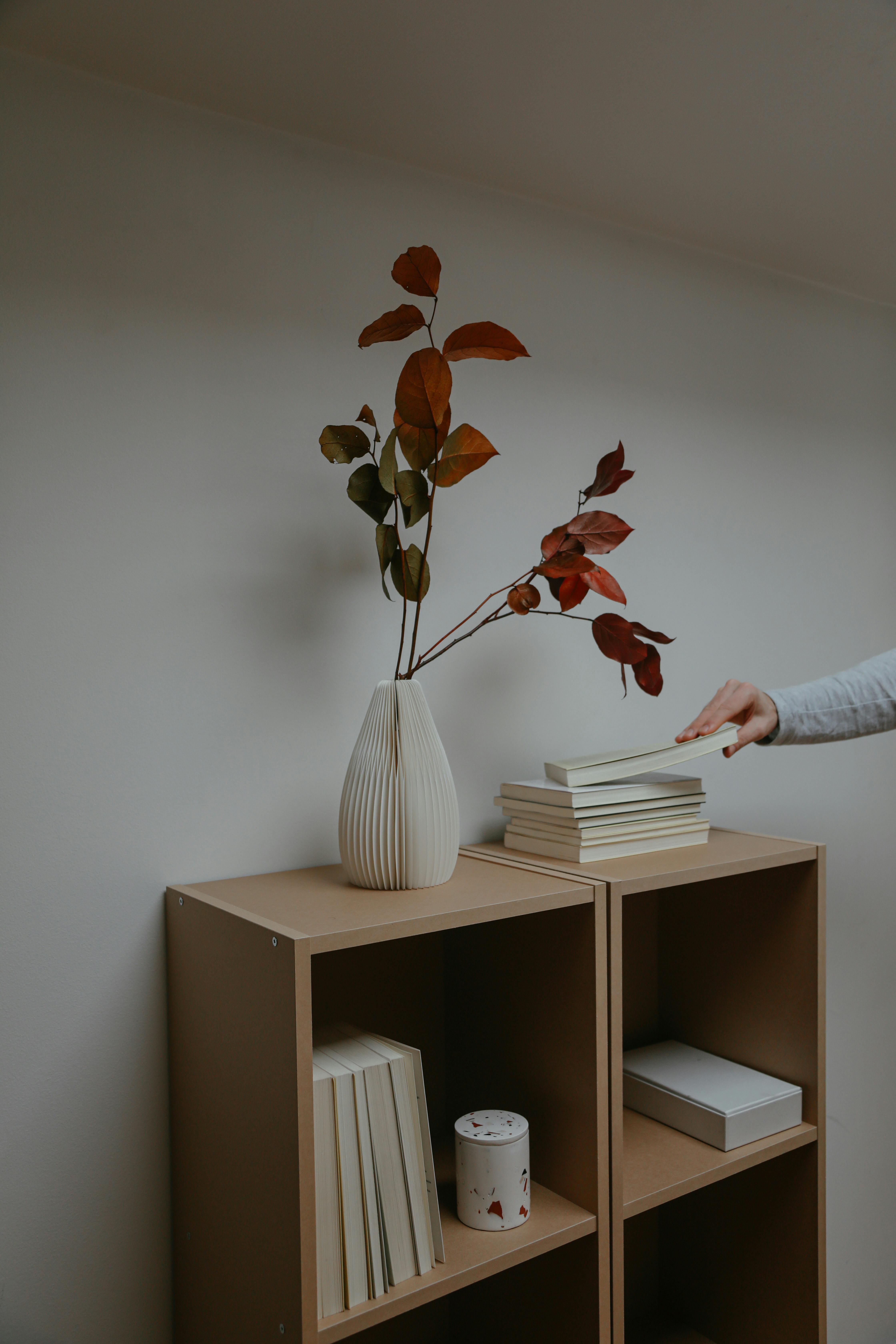
If you need a wall of storage, stacking two Kallax units creates a built-in look for a fraction of the cost of custom shelves. I stacked two units in our living room, anchored both to the wall, and added a simple trim board across the top to make them look like one piece.
The result looks intentional and holds an enormous amount: books, games, baskets, and display items. Safety is critical here, so anchor every unit to the wall with proper hardware, keep heavy items low, and never let children climb a stacked unit.
Done right, it is one of the best storage-per-dollar projects in home organization, and our post on living room organization shows how to style the result.
Pro Tip: I anchor the lower unit to the wall before stacking the upper one so the base never shifts while I lift the second unit into place.
Cost: $50-$150 for two units | Time: 2-3 hours | Difficulty: Moderate
19. Doors and Drawer Inserts

Not every cubby needs to be open. Door and drawer inserts turn individual cubes into closed storage, which is perfect for items you want hidden: chargers, paperwork, medications, or anything visually messy.
I added doors to the bottom row of our living room unit, so the clutter disappears behind clean fronts, while the top rows stay open for books and decor. The inserts are easy to install and can be moved or removed later if your needs change.
Mixing open and closed cubes is also the key to making a Kallax look like real furniture instead of a storage wall, and baskets work beautifully in the remaining open cubes, as our guide to organizing with baskets explains.
Pro Tip: I put drawer inserts in the bottom row and doors above them so the heaviest hidden items sit low and the doors never sag under weight.
Cost: $10-$20 per insert | Time: 15 minutes per insert | Difficulty: Easy
20. A Seasonal Swap System

The final hack is the one that keeps a Kallax useful year after year. Twice a year, I swap the contents of a few cubbies to match the season: winter hats and scarves in, summer beach gear out, and so on.
The off-season items go into labeled bins in a closet or garage, and the Kallax always holds what we actually need right now. This takes about an hour each time, and it means the shelf never slowly fills with things we stopped using months ago.
A Kallax that changes with your life is a piece of furniture you will keep for years, and that is the best kind of organization there is.
Pro Tip: I swap just one cubby at a time during the seasonal change so the unit never sits half-empty and half-chaotic in between.
Cost: $0 | Time: 1 hour twice a year | Difficulty: Easy
Kallax Organization Hacks at a Glance
| Hack | Best Room | Cost | Time |
|---|---|---|---|
| Right size first | Any room | $25-$120 | 1-2 hours |
| Labeled fabric cubes | Any room | $5-$12 each | 20 min |
| Linen cupboard | Hallway | $0-$30 | 30 min |
| Toy rotation | Kids’ rooms | $10-$25 | 1 hour |
| Craft command center | Craft room | $15-$35 | 1-2 hours |
| Shoe wall bench | Entryway | $40-$80 | 1 hour |
| Bench seat | Entryway | $15-$40 | 30 min |
| Stack two units | Living room | $50-$150 | 2-3 hours |
| Doors and drawers | Living room | $10-$20 each | 15 min each |
Mistakes I Made
My biggest mistake was buying bins before planning. I came home with a pile of cubes that did not fit my cubbies or my categories, and half of them ended up in a closet. Plan each cubby first, measure second, buy last.
My second mistake was skipping the wall anchor on a tall unit, which started to lean once it was fully loaded with books. Anchor every tall unit, no exceptions, especially with kids in the house. And my third mistake was filling every single cubby, which made the shelf look like a warehouse.
Leaving one or two cubes open for a plant or a photo makes the whole unit look like furniture, and it is a change I wish I had made years earlier.
Frequently Asked Questions
What size Kallax should I buy?
Measure your wall and think about what will live in the cubes before choosing. A two-by-two unit suits a small room or closet, a two-by-four works well in living rooms and playrooms, and a four-by-four is best for large walls. Buy one size bigger than you think you need if you have the space, because cube storage fills up fast.
Do Kallax units need to be anchored to the wall?
Yes, especially tall units and any unit in a home with children or pets. A fully loaded Kallax is heavy, and anchoring takes only a few minutes with the hardware included in the box. Never let children climb on a Kallax, anchored or not.
The U.S. CPSC’s Anchor It! guidance says to secure top-heavy furniture to the wall with anti-tip hardware and follow the manufacturer’s instructions.
What bins fit in a Kallax cube?
Standard Kallax cubes are about 13 inches square, so bins around 12 to 13 inches fit well. Fabric cubes made for cube shelving are the easiest choice, but baskets, clear bins, and drawer inserts all work. Measure your cubes before buying, and leave a little finger room so bins slide in and out easily.
Can a Kallax hold heavy items like books and records?
Yes, Kallax units are quite sturdy, but keep heavy items in the lower cubes and anchor the unit to the wall. Distributing weight low keeps the shelf stable and prevents sagging over time. For very heavy collections, a lower, wider unit is more stable than a tall one.
How do I make a Kallax look nice, not like storage?
Mix open and closed cubes, use matching bins in your room’s colors, and leave one or two cubes open for plants, photos, or decor. Adding doors to the bottom row hides clutter while the top rows stay decorative, and a simple trim board across the top of stacked units makes them look built in.
Final Thoughts
The Kallax earns its popularity because it is simple, affordable, and endlessly adaptable. Plan each cubby before you fill it, use labeled bins to keep categories clear, anchor tall units to the wall, and leave a little room for display so the shelf looks like furniture.
Whether it lives in a kid’s room, a craft room, an entryway, or a living room, the same principles apply, and the same shelf can move with you from room to room as your life changes. Start with one unit and a few labeled cubes, and you will quickly see why so many organized homes have one.