
20 Entryway Organization Ideas for a Calm, Welcoming Front Door
An entryway does not need a hallway. Zone it into four areas — Drop, Hang, Sit, Launch — keep only daily items by the door, and most entryways work for $40–$100 and about 2 hours.
Start by emptying the entryway completely, then measure the wall and the hook height for the shortest person who uses it — hooks go about 60 inches high for adults and 42 inches for kids, spaced twelve inches apart — twelve inches per hook is the minimum for adult coats. Sort by user and frequency, and match the setup to your entryway type: hallway, no hallway, apartment, or a house with a mudroom. No hallway? A strip of wall, a mat and a tray. Hooks go first, then shoes, then the drop tray, then the launch basket. Keep only what leaves the house with you — keys, wallet, sunglasses, the bag, two pairs of shoes per person and one launch basket — and run a 2-minute reset every evening. Renters can do it with over-the-door hooks and a freestanding shoe cabinet, no drilling; one zone is $10–$25 and 15–30 minutes.
The entryway is the smallest room in most homes and the hardest working. Coats, shoes, keys, bags, mail, and sports gear all land there within minutes of everyone coming home, and without a system it turns into a pile by the door.
I spent years tripping over shoes before I realized the problem was not the size of my entryway — it was that nothing in it had a proper home. These entryway organization ideas fixed that, and most of them cost very little.
The secret is simple: give every single thing that enters your home a landing spot within arm’s reach of the door. Do that, and the entryway starts cleaning itself.
The 20 ideas turn a crowded entryway into a calm landing spot, with hooks, benches, baskets, shoe racks, and stations for coats, keys, mail, bags, and seasonal gear. Every idea lists its honest cost, time, and difficulty, so start with the pile that greets you the moment you walk in.
Key Takeaways
- Every item that comes through the door needs a labeled home: hooks for coats, a tray for keys, a basket for shoes.
- Walls and doors are free storage — use hooks, rails, and door racks before buying furniture.
- A bench makes the entryway work twice as well, because sitting down to remove shoes keeps them off the floor.
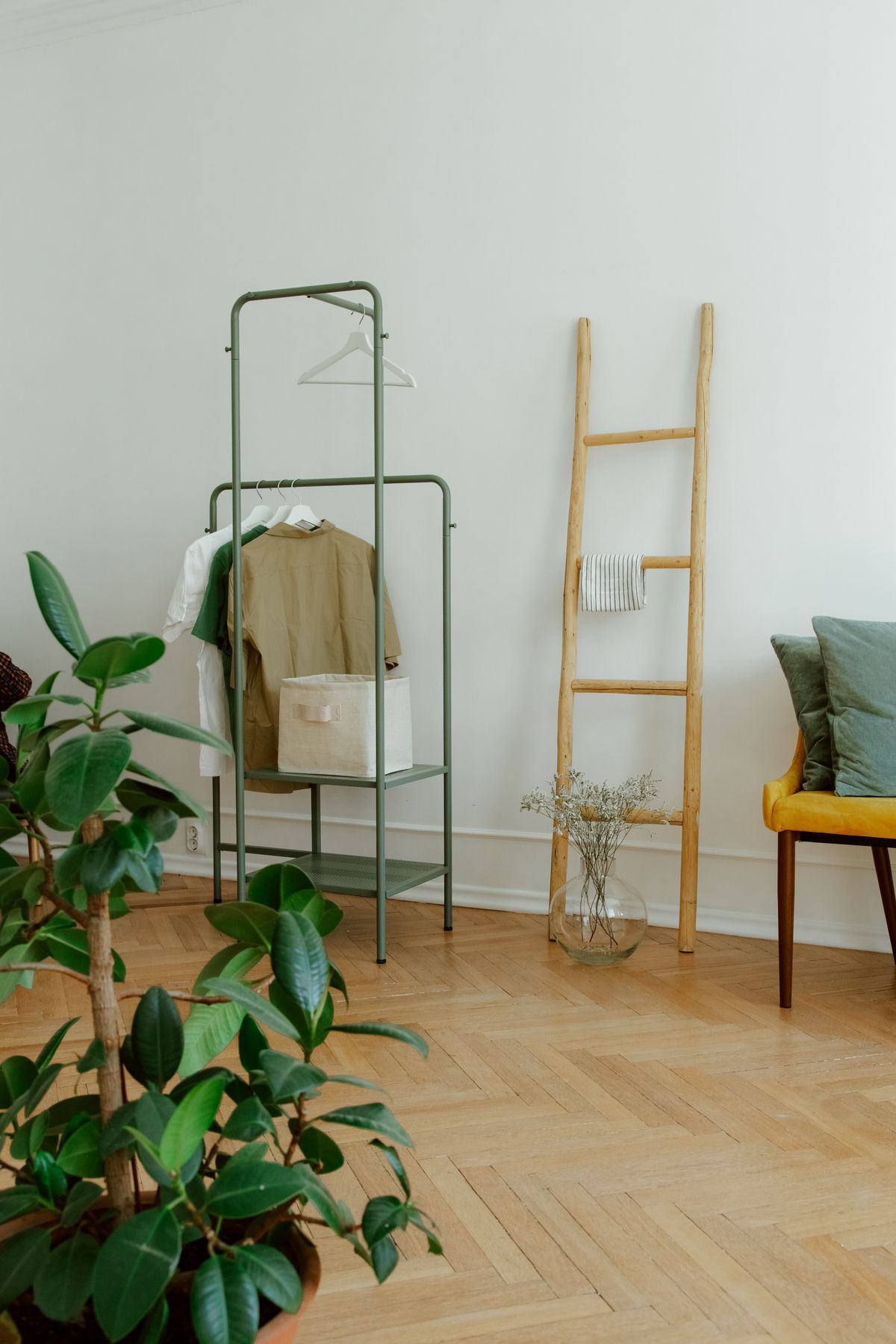
- Kid-height hooks and baskets mean children can actually use the system instead of ignoring it.
1. A Wardrobe Nook for Coats and Shoes
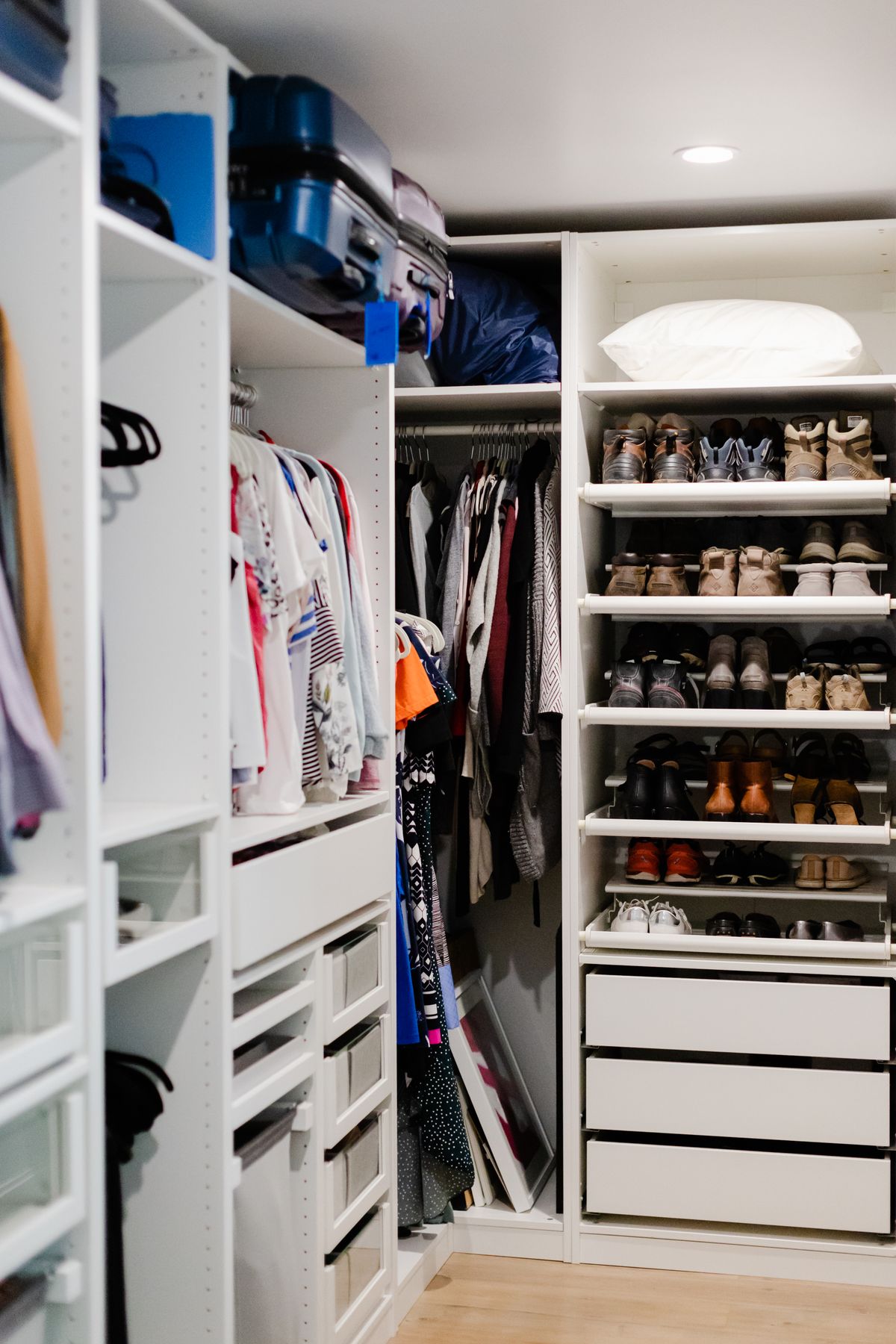
If you have even a small closet near the door, turn it into a dedicated entryway wardrobe. I cleared out a hall closet that had become a junk cupboard, added a rail at coat height and a shelf above it, and suddenly every coat had a home.
Shoes live on the floor of the closet in pairs, and a small basket on the shelf holds hats and gloves. The rule that keeps it working is strict: only things we wear out of the house live here. Out-of-season coats move to the bedroom closet, which keeps the entryway closet from overflowing by November.
Pro Tip: I hang the coat I wear most on the hook nearest the door, so I am not pushing past out-of-season jackets every morning.
Cost: $0–$30 | Time: 1–2 hours | Difficulty: Easy
2. Adhesive Hooks for Bags and Necklaces

Adhesive hooks are the renter’s best friend. I stuck a row of them inside the entryway closet door for bags, dog leads, and the lanyards we always lose. They hold a surprising amount of weight if you clean the surface first and wait a day before hanging anything heavy.
The inside of a door is wasted space in most homes, and using it means the wall stays clear for art or a mirror. When I move out, the hooks peel off without a mark, which is exactly why I chose them over screws in a rental.
Pro Tip: I stick one hook inside the closet door just for the dog lead, so walks never start with a search.
Cost: $5–$12 | Time: 10 minutes | Difficulty: Easy
The hooks live inside the entryway closet door — for the full closed-closet system, my coat closet organization guide covers coats, shoes and accessories in one small closet.
3. A Basket by the Door for Daily Carry

I keep one sturdy basket right beside the front door, and it holds everything we grab on the way out: sunscreen, the dog’s spare lead, reusable shopping bags, and an umbrella. Having one catch-all basket by the door means those things stop migrating to the kitchen counter.
I chose a basket with handles so I can carry it to the car in one trip when we are packing for a day out. The trick is to empty it once a week, or it quietly becomes a junk basket — I do mine every Sunday while the kettle boils.
Pro Tip: I drop reusable shopping bags into the basket the moment I unpack them, so they are ready for the next trip out.
Cost: $8–$18 | Time: 5 minutes | Difficulty: Easy
4. A Bookshelf Turned Into Lockers

A cheap bookshelf can become entryway lockers with almost no work. I stood a tall bookshelf by the door, gave each family member one shelf section, and added small baskets for their gloves, hats, and chargers. It cost a fraction of built-in lockers and took an afternoon to set up.
The baskets are the key: without them, the shelves just become open piles. I labeled each basket with a name, and for the first time ever, my kids put their own things away without being asked twice. A bookshelf also fits in a narrow hallway where a bench never would.
Pro Tip: I give each person the shelf at their own reaching height, so gloves and hats actually get put back after use.
Cost: $25–$60 | Time: 1 hour | Difficulty: Easy
Lockers and cubbies belong to the family back-door room, not the front door — my mudroom organization ideas run that system for sports gear, school bags and muddy boots, while this post stays at the front-door drop zone.
5. A Pegboard Wall for Everything

A pegboard wall in the entryway is the most flexible storage I own. Hooks, baskets, and small shelves all move around as our needs change, and I can see everything at a glance. Right now it holds keys, sunglasses, the dog lead, a small basket for mail, and a calendar.
Pegboard is cheap, it paints beautifully to match the wall, and it uses vertical space that would otherwise hold one picture frame. Mount it properly into studs or with heavy-duty anchors, because a loaded pegboard is heavier than it looks.
Pro Tip: I move the sunglasses hook to the top row in summer and swap it for gloves in winter, so the board follows the season.
Cost: $15–$35 | Time: 1 hour | Difficulty: Moderate
Tall furniture by the door needs anchoring, not just placing — the CPSC’s Anchor It guidance says to secure top-heavy furniture with inexpensive anti-tip brackets and remove tempting objects from the top, so nothing climbs or tips.
6. A Storage Bench That Does Double Duty
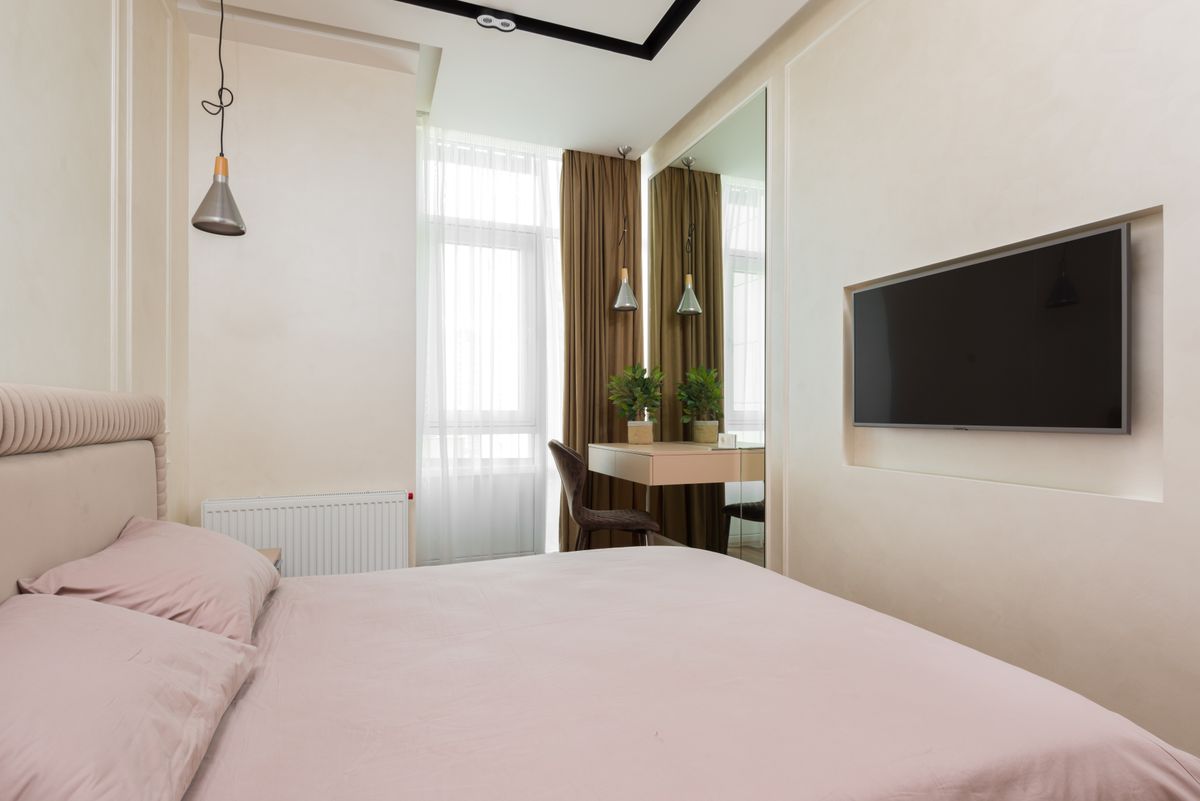
A bench changed my entryway more than any other single piece of furniture. Sitting down to take off shoes means shoes actually get taken off instead of kicked into a corner, and the storage inside the bench hides them completely.
I keep a cushion on top so it is comfortable, and inside there is one basket per person for their shoes. The bench also gives guests somewhere to sit, which makes the whole entryway feel welcoming instead of chaotic. If space is tight, even a narrow storage ottoman works — the sitting-down part matters more than the size.
Pro Tip: I keep only the shoes I wear that week inside the bench, so sitting down never means hunting through pairs I rarely use.
Cost: $40–$120 | Time: 20 minutes to assemble | Difficulty: Easy
7. Hooks by the Interior Door for Daily Gear
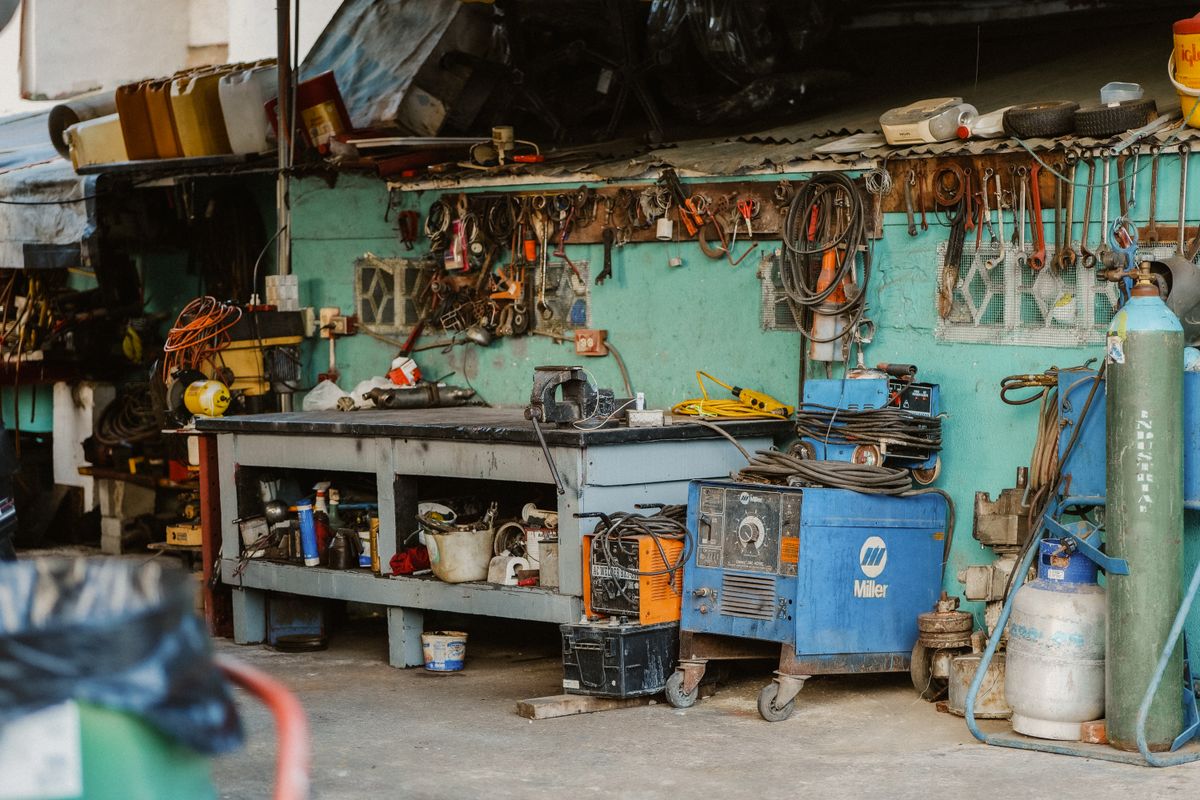
The wall beside the door from the garage into the house is where our daily gear lives: work bags, school bags, and jackets. A row of strong hooks there means bags never reach the kitchen table.
I spaced the hooks far enough apart that a loaded backpack does not crowd its neighbor, which was my first mistake — hooks too close together just become a tangled pile. I also put a small shelf above the hooks for sunglasses and wallets, so the whole going-out routine happens in one spot.
It is a tiny change that removed a daily argument about missing bags.
Pro Tip: I space work bags and school bags one hook apart, so straps never tangle when someone grabs theirs in a hurry.
Cost: $10–$25 | Time: 30 minutes | Difficulty: Easy
8. A Slim Shoe Rack for Narrow Hallways

Narrow hallways need slim solutions, and a slim shoe rack is exactly that. Mine is barely a handspan deep, but it holds two pairs per tier and keeps shoes off the floor where they become trip hazards. I keep only the shoes we wear most days on the rack — the rest live in the bedroom closet.
A rack with open sides works better than a closed cabinet here, because shoes air out instead of smelling musty. I wipe it down once a week, which takes about two minutes and keeps the hallway smelling fresh.
Pro Tip: I place the shoes I wear daily on the middle tier, where I can step into them without crouching or reaching high.
Cost: $15–$40 | Time: 15 minutes | Difficulty: Easy
9. An Elegant Wardrobe for a Formal Entryway

If your entryway is part of your living space rather than a separate mudroom, a closed wardrobe keeps everything invisible and elegant. I use a slim wardrobe with a rail and shelves for coats, and the doors close over the whole mess.
Inside, I follow the same rules as any entryway: one section per person, a basket for small items, and nothing that does not leave the house. The wardrobe also protects coats from dust, which matters if you own wool or good jackets. It cost more than hooks, but for a front-facing entryway it was worth every penny.
Pro Tip: I keep a small basket inside the wardrobe for scarves, so the closed doors still hide the little things that clutter a rail.
Cost: $80–$250 | Time: 1–2 hours to assemble | Difficulty: Moderate
10. A Hallway Gallery for Family Art

An entryway does not have to be all storage. I hung a small gallery of the kids’ art along the hallway wall, and it made the whole space feel like home instead of a storage room. Lightweight frames with simple clips mean I can swap art every few months without tools.
The gallery also solved a real problem: the kids’ art used to pile up on the console table, and now it has a proper display home. Keep the frames high enough that bags and coats do not knock them, and use one frame style so the wall looks intentional rather than random.
Pro Tip: I rotate one piece of art each month, so the hallway feels fresh without taking down the whole display.
Cost: $10–$30 | Time: 30 minutes | Difficulty: Easy
11. An Open Wardrobe Section for Coats

Open wardrobe sections work brilliantly in entryways because there are no doors to leave open or close with full hands. I use one section with a rail for coats and baskets below for shoes and accessories. The open design forces honesty: if it looks messy, it is messy, which motivates everyone to hang things properly.
I keep a small basket on top for out-of-season accessories, and I rotate them twice a year. Open storage is not for everyone, but if your family will actually hang coats up, it is faster than any closed system.
Pro Tip: I leave the bottom basket for shoes only and coats on the rail above, so nothing drapes over footwear when I hang a coat up.
Cost: $30–$80 | Time: 30 minutes | Difficulty: Easy
A wall track system mounts the same way in a narrow entryway — the Container Store’s Elfa closet-kit instructions start with a level top track screwed into studs, then hanging standards that slide along it to set shelf heights.
12. Entryway Organization Ideas: A Wall Mail Station by the Door

Mail is the entryway’s sneakiest clutter. It arrives daily, it has no obvious home, and it piles up on every flat surface. I mounted a wall mail station by the door with three slots: action, file, and recycle. Incoming mail gets sorted the moment it comes in, and the recycle slot gets emptied every evening.
This one change ended the mail pile on my kitchen counter permanently. If wall mounting is not possible, a small basket on the console table with the same three-section idea works almost as well.
Pro Tip: I sort mail into action, file, or recycle the moment I walk in, so the station never becomes a second pile.
Cost: $10–$25 | Time: 20 minutes | Difficulty: Easy
13. A Key Station You Cannot Miss

Keys are the number one lost item in most homes, and the fix is embarrassingly simple: one hook or strip, right by the door, used every single time. I mounted a small magnetic key strip at eye level next to the door, and the rule is that keys live there or in a pocket — nowhere else.
It took about two weeks for the habit to stick, and now nobody loses keys anymore. A small bowl works too, but hooks and strips are better because keys stay visible. Put the key station at the height of the shortest regular user, or kids will never reach it.
Pro Tip: I hang my keys on the strip before I take my coat off, so the habit sticks even on rushed evenings.
Cost: $5–$15 | Time: 15 minutes | Difficulty: Easy
14. Hanging Shoe Pockets for Accessories

A hanging shoe organizer on the entryway closet door holds far more than shoes. I use the pockets for gloves, scarves, sunscreen, hand warmers, and the small things that otherwise end up in a junk drawer. Clear pockets are best because you can see what is inside without opening anything.
This is one of those entryway organization ideas that costs almost nothing but removes a surprising amount of daily friction, especially in winter when gloves and hats multiply. Label the top row for each family member to keep it fair.
Pro Tip: I keep hand warmers in the pocket beside the gloves, so winter pairs stay together instead of splitting across the closet.
Cost: $8–$18 | Time: 10 minutes | Difficulty: Easy
15. A Tray Station for the Front Door
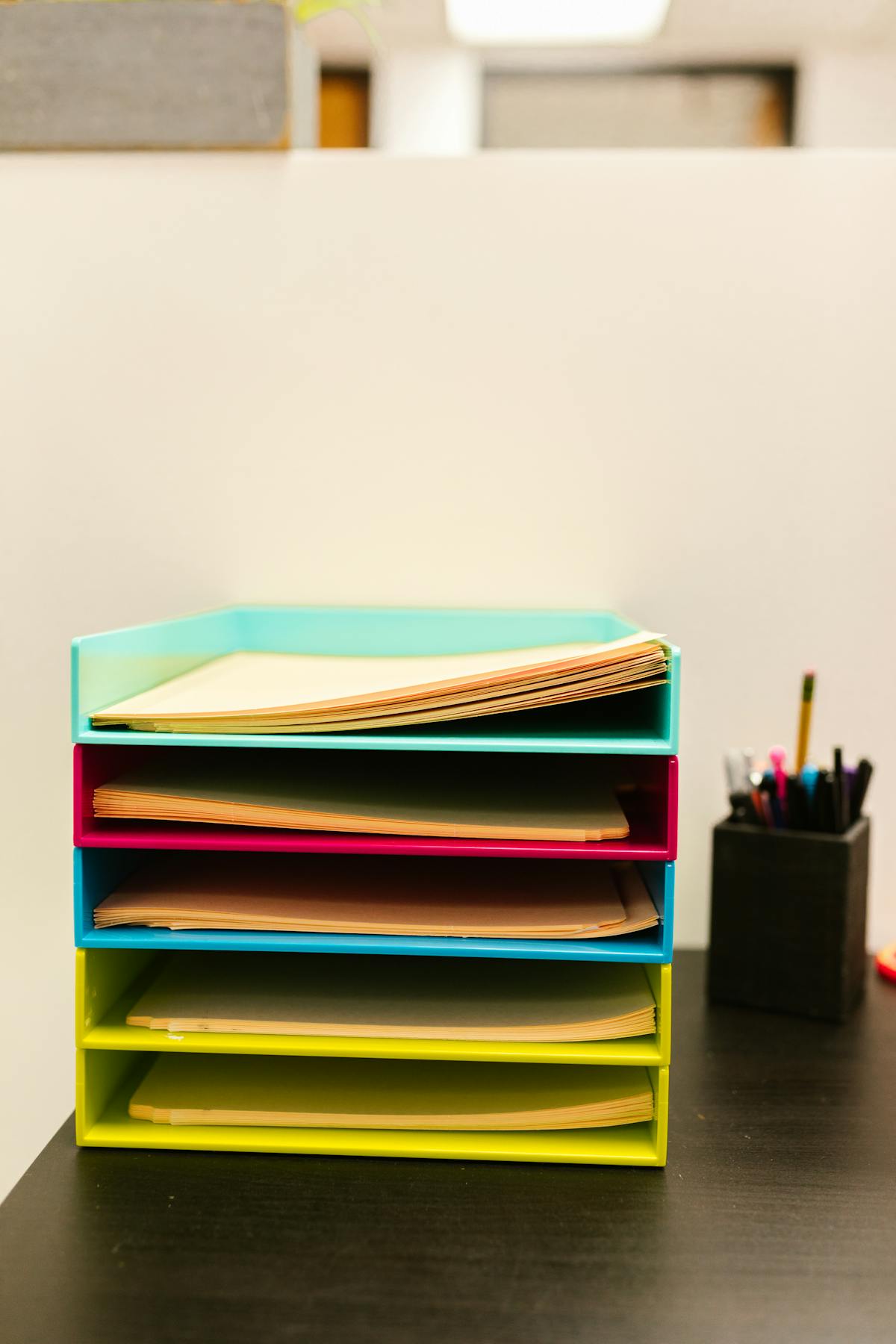
I keep a small stack of trays on the entryway console for the paperwork that comes through the door: school forms, bills, and letters that need action. Each tray has a job, and nothing sits in a tray for more than a week — that is the rule that keeps it from becoming another pile.
Trays work because they are visible and bounded: when a tray is full, something must be dealt with before more goes in. This is the same system I use for paper clutter throughout the house, just scaled down to the front door.
Pro Tip: I clear any tray that has sat full for a week, so school forms and bills never quietly pile past their deadlines.
Cost: $5–$15 | Time: 10 minutes | Difficulty: Easy
16. A Basket for Seasonal Gear

Seasonal gear — winter hats, summer hats, rain gear, scarves — needs a home that changes with the weather. I keep one large basket in the entryway for the current season’s gear, and the off-season gear lives in a labeled box upstairs. When the season changes, I swap the contents in ten minutes.
This keeps the entryway from drowning in twelve months of accessories at once. A lidded basket works best here, because it hides the seasonal jumble and keeps dust out during the months it sits unused.
Pro Tip: I swap the basket’s contents when the weather shifts, moving last season’s hats to storage the same day the new ones come out.
Cost: $10–$25 | Time: 15 minutes per season | Difficulty: Easy
17. A Lidded Basket for Linen and Throws

The entryway closet in my house also holds the spare throws and picnic blankets, and a lidded basket keeps them clean and contained. Lids matter in an entryway because dust and pet hair settle on everything near the door. I chose a basket with a handle so I can grab the whole thing on the way to the park.
The same idea works for any bulky, soft item that does not need to be visible: beach towels in summer, spare blankets in winter, and the dog’s towels all year round.
Pro Tip: I fold throws with the picnic blanket on top, since that is the one I reach for first on outdoor days.
Cost: $12–$25 | Time: 10 minutes | Difficulty: Easy
18. A Console Station for Mail and Keys
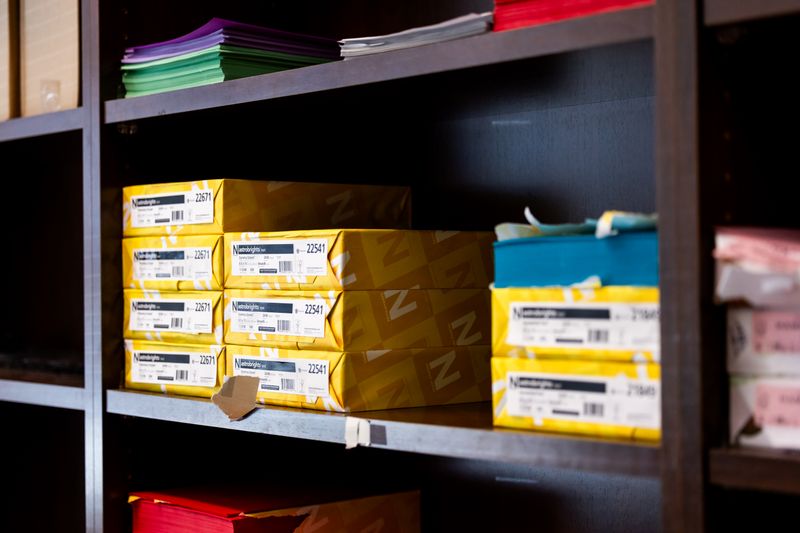
A narrow console table with a basket and a small tray is the whole entryway system for many homes. The tray catches keys and wallets, the basket catches mail, and the table itself stays clear. I keep the console deliberately small so it cannot accumulate clutter — a big table invites piles, while a small one forces decisions.
The basket gets emptied every evening, and the tray gets a quick wipe weekly. This setup costs little, fits in almost any hallway, and is the easiest entryway system to maintain long-term.
Pro Tip: I keep the console tray for keys and wallets only, and let mail live in its own basket, so the two never mix into a heap.
Cost: $30–$80 | Time: 20 minutes | Difficulty: Easy
19. Kid-Height Hooks and Baskets
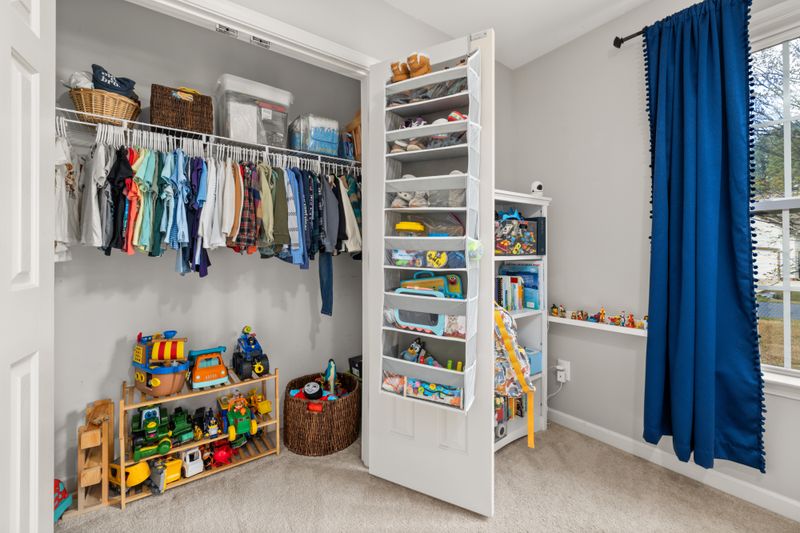
Kids will not use a system built for adults. I mounted hooks at my children’s shoulder height and put their baskets on the floor instead of a high shelf, and suddenly they started hanging up their own coats.
The hooks are colorful so each child knows which one is theirs, and the baskets are big enough that “tidy” does not require precision. This is the single change that made the biggest difference in my entryway, because it turned three people who created mess into three people who clean it up.
Check the hook height twice a year as kids grow.
Pro Tip: I hang my child’s school bag hook at shoulder height and leave the basket on the floor beneath it, so coat and bag land in one spot.
Cost: $8–$20 | Time: 20 minutes | Difficulty: Easy
20. Clear Shoe Boxes for the Overflow
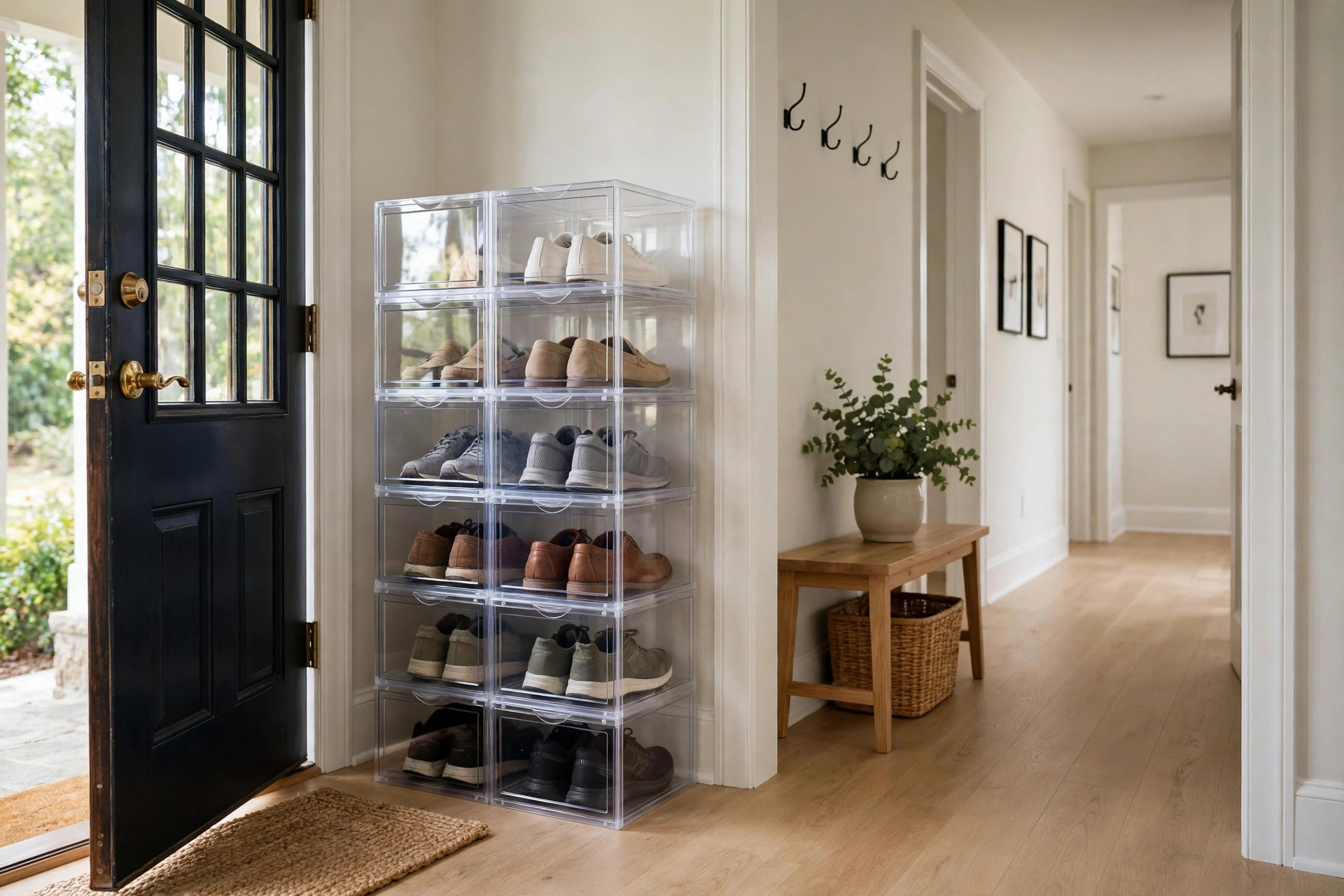
When the shoe rack is full, clear shoe boxes are my overflow system. I keep out-of-season and special-occasion shoes in labeled clear boxes stacked in the entryway closet, where I can see them without opening anything. Clear boxes beat opaque ones because you can find the right pair without unstacking five boxes.
I also photograph the shoes and stick the photo on the box end for the pairs we wear rarely. This keeps the daily rack to just the shoes we actually wear, which is the real secret of a tidy entryway.
Pro Tip: I stack out-of-season shoes in the closet with the label facing out, so I can find the special-occasion pair without opening every box.
Cost: $12–$25 for a set | Time: 30 minutes | Difficulty: Easy
Clear boxes cost almost nothing — the organize your house on a low budget guide runs the same cheap-first logic for the whole house.
Comparison Table
| Idea | Best For | Cost | Biggest Win |
|---|---|---|---|
| Wall hooks | Renters, small spaces | $5–$25 | Instant, no furniture needed |
| Storage bench | Families with kids | $40–$120 | Sitting + hidden shoe storage |
| Key station | Everyone | $5–$15 | Ends lost keys |
| Mail station | Paper clutter | $10–$25 | Ends counter piles |
| Kid-height hooks | Families | $8–$20 | Kids tidy up themselves |
| Bookshelf lockers | Budget mudrooms | $25–$60 | One spot per person |
Mistakes I Made
Buying a bench that was too big. My first entryway bench blocked the door swing and made everything worse. Measure the door arc before buying any entryway furniture.
Hooks too close together. Coats on hooks six inches apart just become one tangled mass. Twelve inches per hook is the minimum for adult coats.
No rule for what lives in the entryway. Without a rule, the entryway became overflow storage for the whole house. Now only going-out items live there, and everything else has to go.
Forgetting the mail. I organized coats and shoes beautifully and ignored mail for months. The paper pile came back until I added the mail station.
FAQs
How do I organize a very small entryway?
Use the walls and the door: hooks, a door rack, and one small basket. Skip furniture entirely and give every item a hook or a pocket instead of a shelf.
Walls and the door are the whole method for a tiny entry — the small space organization ideas guide runs the same vertical-first logic for every small room.
What is the best shoe storage for an entryway?
A slim rack for daily shoes plus clear boxes in a closet for the rest. Keep only the shoes you wear this week on the rack, and rotate the rest seasonally.
How do I stop the entryway from getting messy again?
Do a two-minute reset every evening: shoes in the basket, coats on hooks, mail sorted. A tiny daily habit beats a big monthly cleanout every time.
Should the entryway have a mirror?
Yes, if space allows. A mirror lets everyone do a last check before leaving, and it makes a small entryway feel larger and brighter. Hang it where bags will not knock it.
How many hooks do I need in an entryway?
Plan one hook per person for a coat, plus one or two spare for guests and bags. In my house of four, six hooks is the sweet spot.
Final Thoughts
A calm entryway is not about having a big mudroom or expensive furniture. It is about giving every thing that comes through your door a home within reach, and building the two-minute habit of putting things back.
Start with hooks, a key station, and a basket for shoes — those three moves alone will transform most entryways in a single weekend. For more ideas, my posts on key storage ideas, organizing paper clutter, and garage organizing ideas pair well with this one.




8 Comments